| 
| |
|
|
This page contains historical and present day photos of Ontario's King's Highway 7B (Lindsay Business Route). All photographs
displayed on this page were taken by the Webmaster (Cameron Bevers), unless specifically noted otherwise. Historical photographs are arranged in approximate
chronological order, while present day photographs (Year 2000 to date) are arranged by location from west to east. Click on any thumbnail to see a larger image!
Please note that all photographs displayed on this
website are protected by copyright. These photographs must not be reproduced, published,
electronically stored or copied, distributed, or posted onto other websites without
my written permission. If you want to use photos from this website, please
email me first for permission. Thank-you!
|
|---|
|
Historical King's Highway 35B (Lindsay) Photographs
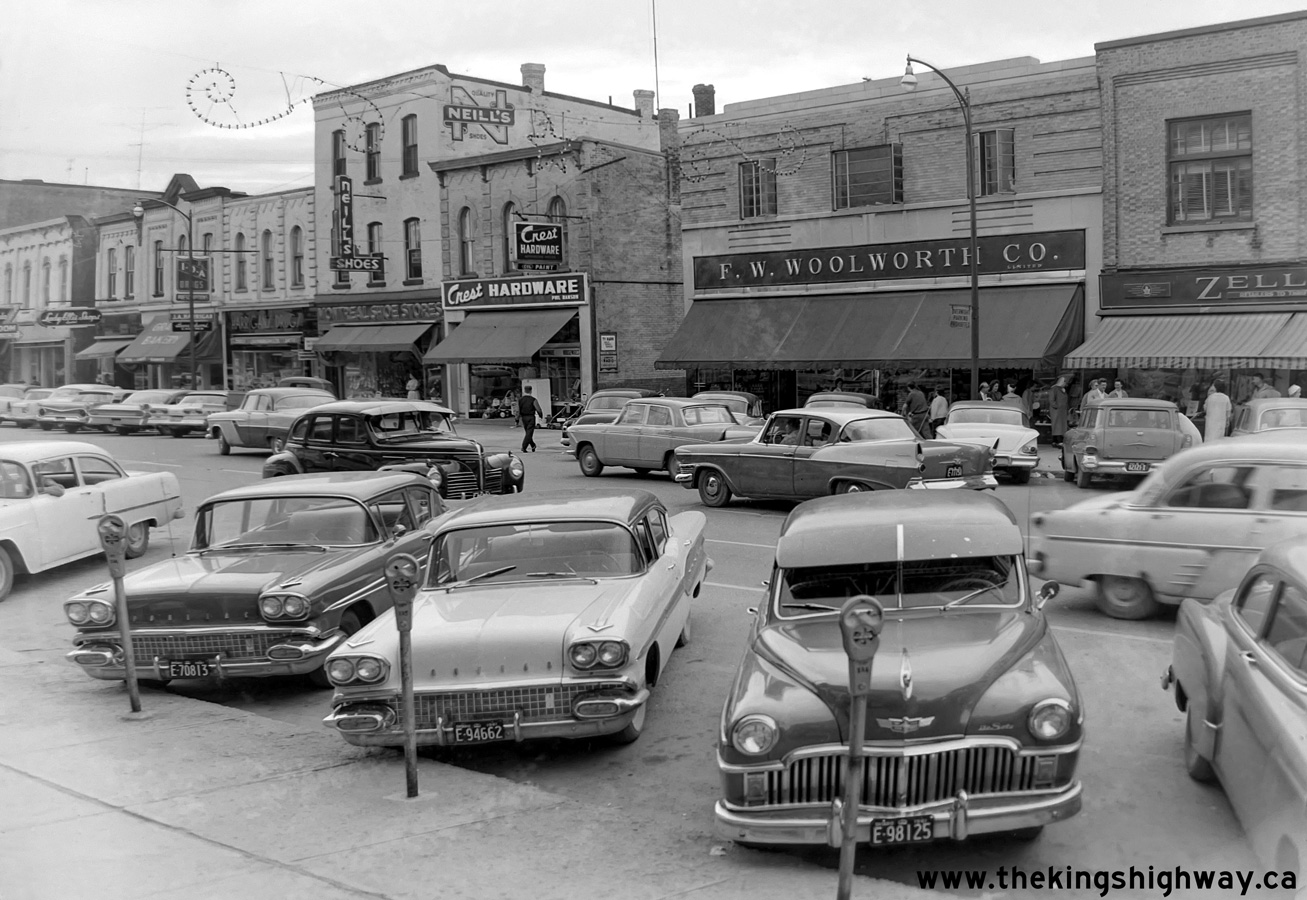
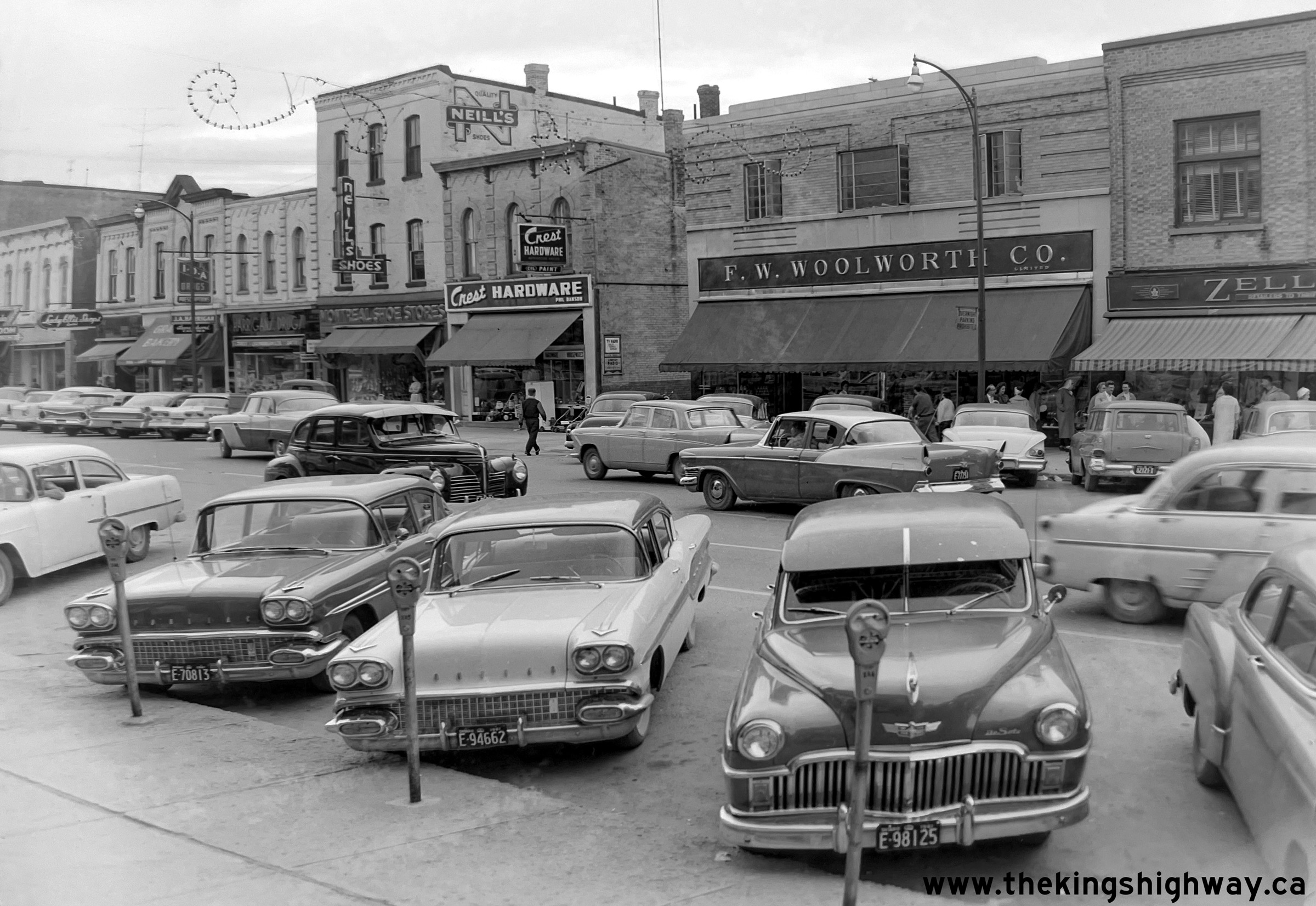
Above - View of Kent Street (Hwy 7B & Hwy 35B) near William Street in Downtown Lindsay. See an
Enlarged Photo Here. Photo taken in 1961. (Photo from Cameron Bevers' historical photograph collection - Original photographer unknown) |
|---|
|
Present Day King's Highway 7B (Lindsay) Photographs
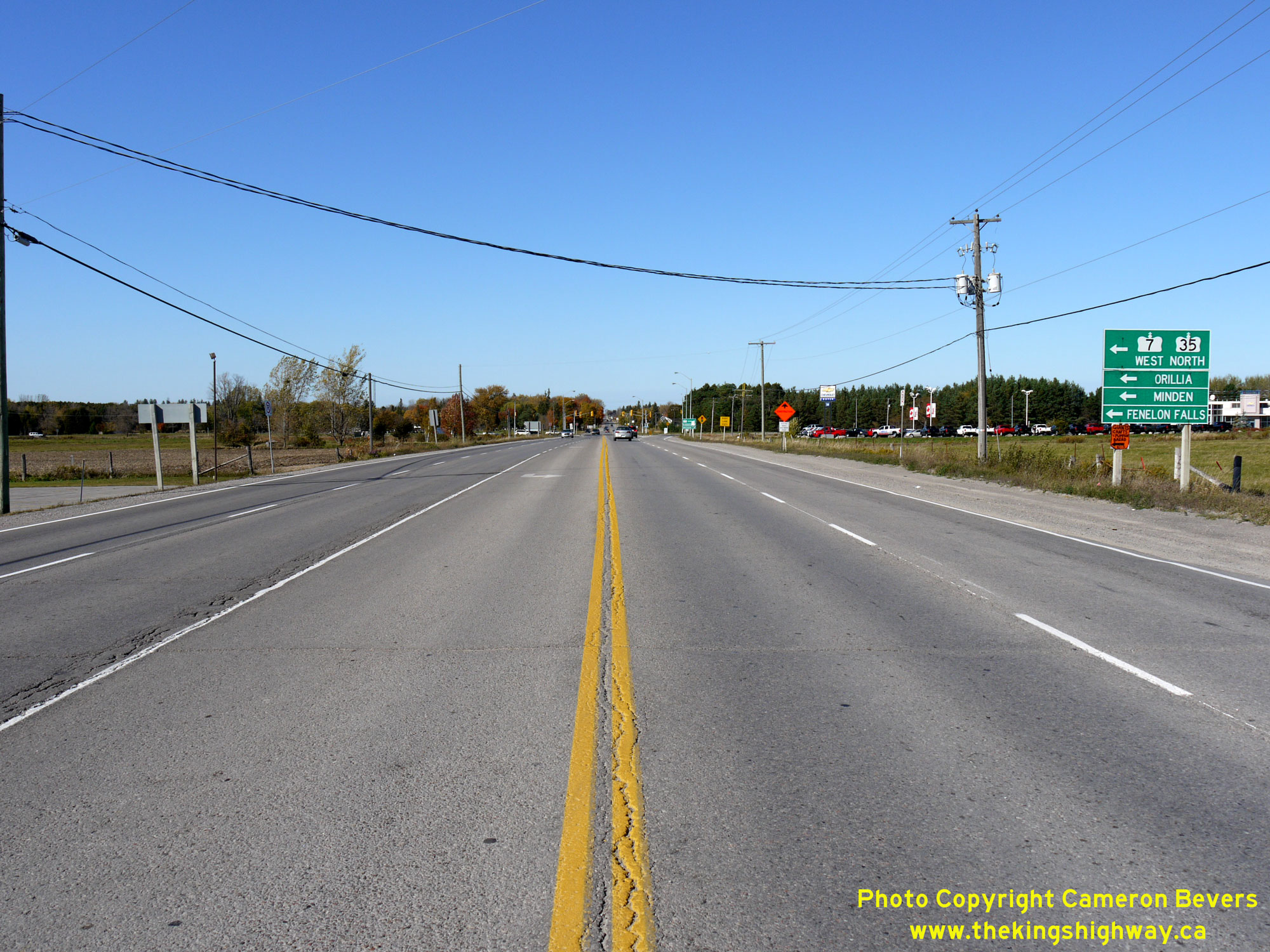

Left - Facing north along Hwy 35 approaching the Hwy 7 Junction at the Lindsay Bypass. This highway junction is a major decision point in the provincial
highway system, with motorists having the choice of following Hwy 7 East towards Peterborough, or Hwy 7 West & Hwy 35 North towards Sunderland and Minden,
respectively. Much of Central Ontario's long-distance through traffic passes through this intersection. Historically, this was also the southern terminus of Lindsay's
Business Route (Hwy 7B & Hwy 35B). See an Enlarged Photo Here. (Photograph taken on October 10, 2010 - © Cameron Bevers) Right - Green guide signs marking the overlapped route of Hwy 7 West & Hwy 35 North via the Lindsay Bypass, along with destination guide signs. Although the "control city" of Orillia is signed at this junction, the city is actually not located on either Hwy 7 or Hwy 35. Rather, traffic needs to turn north from Hwy 7 via Hwy 12 at Sunderland Corners in order to reach Orillia. For northbound Hwy 35 motorists, Orillia is actually a logical control city to sign to, as this is the most direct route to Orillia from many cities and towns located along Lake Ontario's shoreline. See an Enlarged Photo Here. (Photograph taken on October 10, 2010 - © Cameron Bevers) 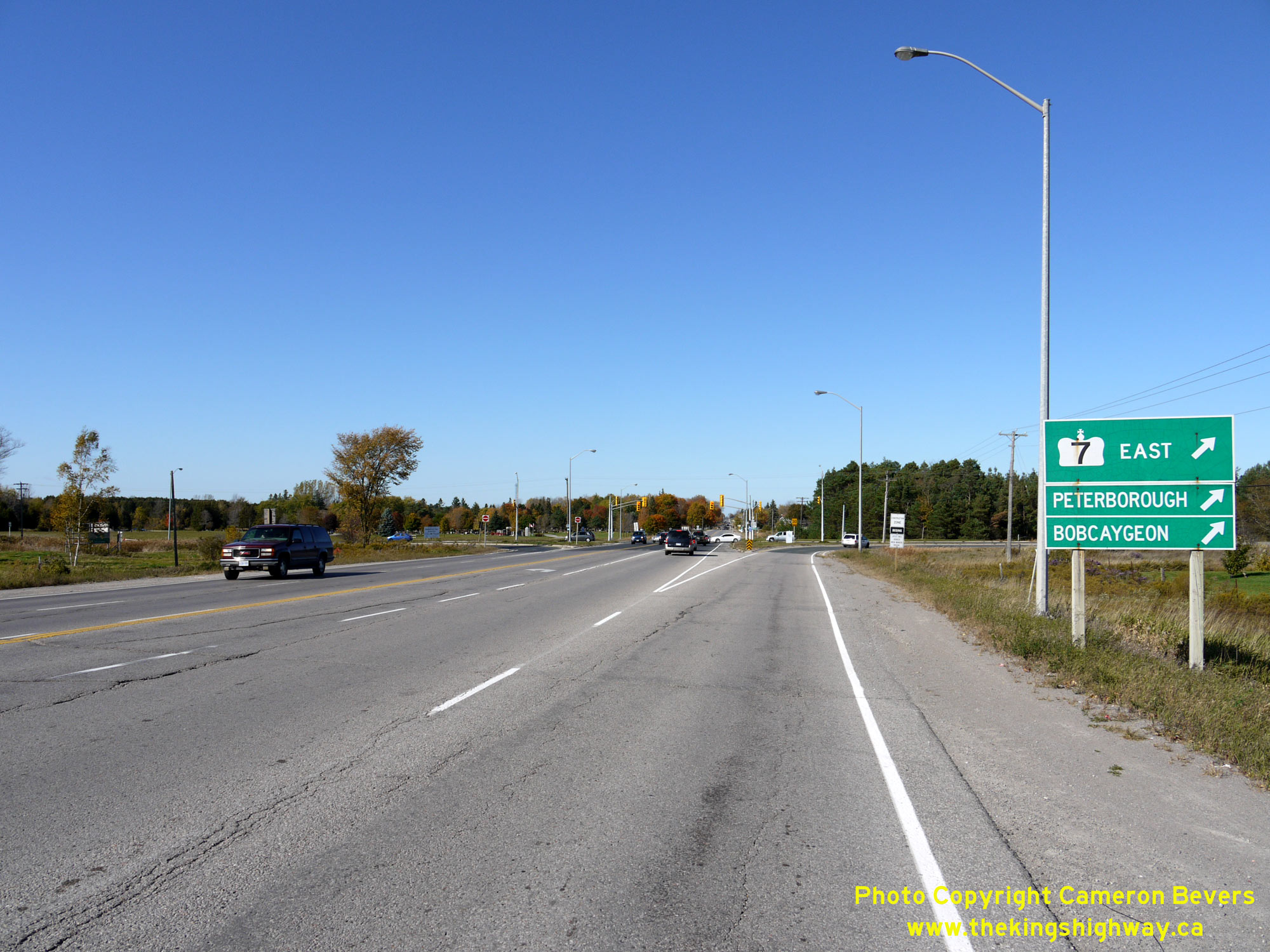
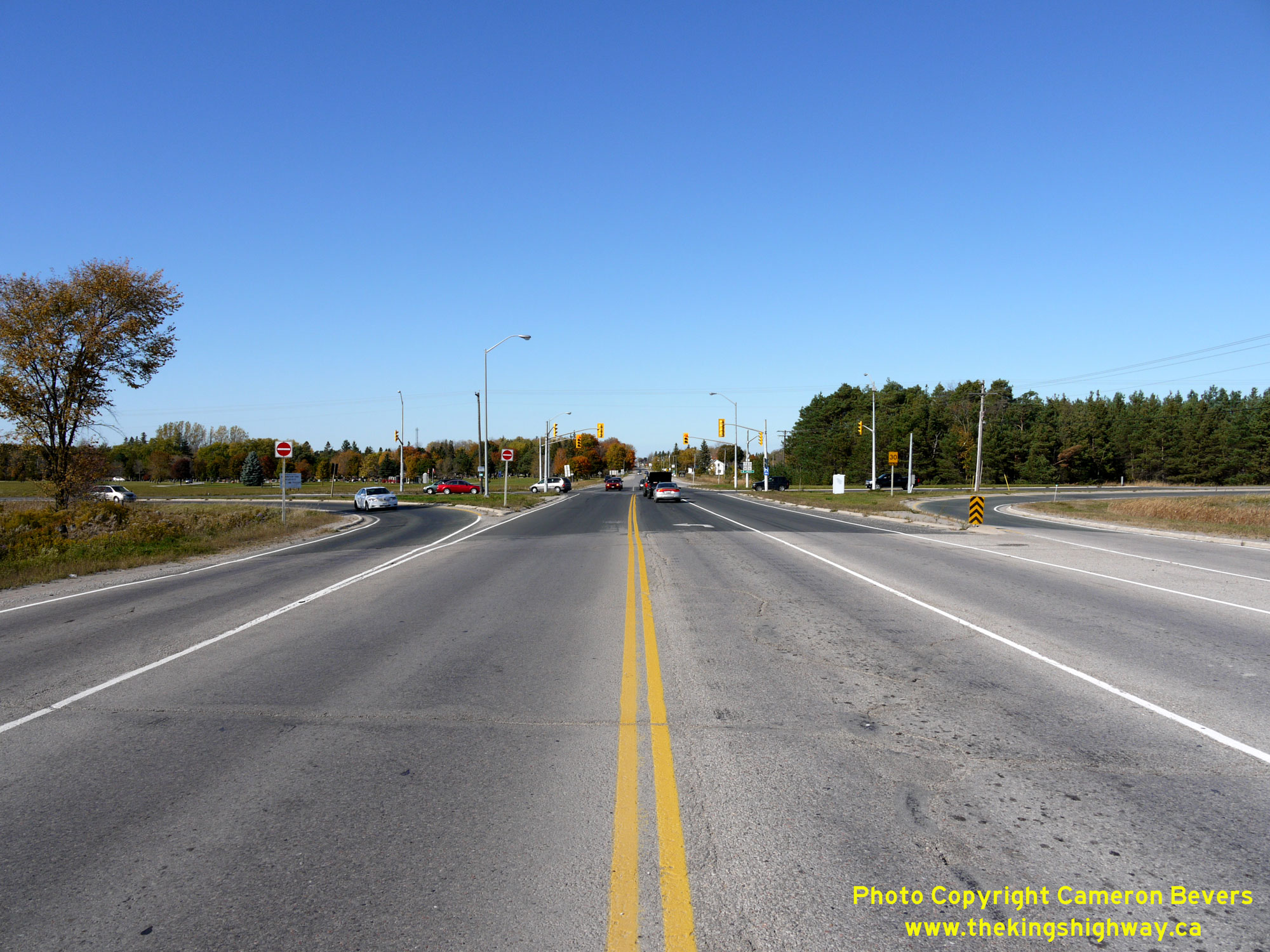
Left - Green guide signs marking Hwy 7 East on northbound Hwy 35 near Lindsay. Bobcaygeon is signed as a control city via Hwy 7 East even though traffic needs
to turn north from Hwy 7 via nearby Hwy 36 in order to reach Bobcaygeon. Logically, Peterborough is signed as the next eastbound control city via Hwy 7 East. See an
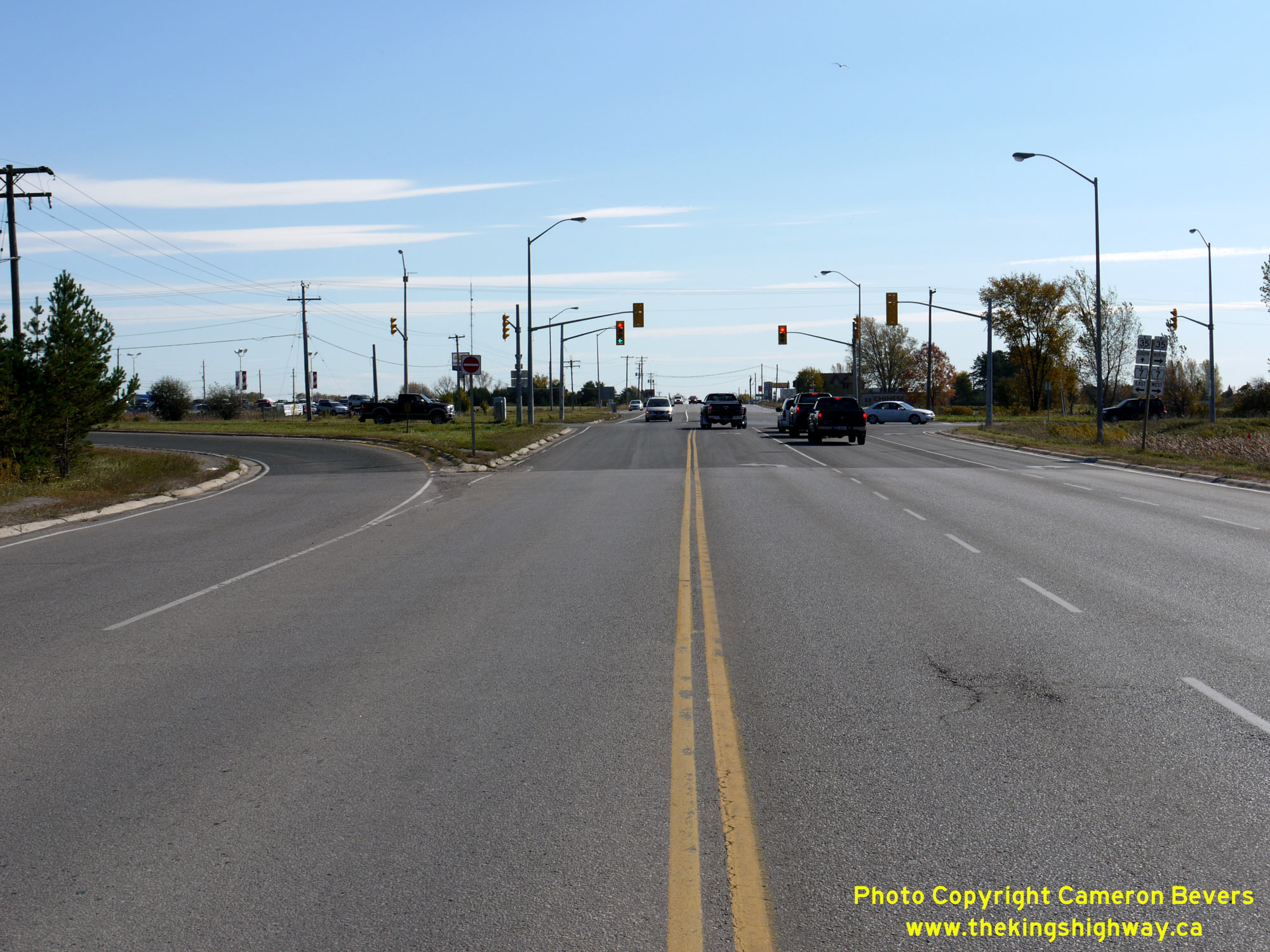
Enlarged Photo Here. (Photograph taken on October 10, 2010 - © Cameron Bevers) Right - Approaching the Hwy 7 Junction on Hwy 35, facing north towards Lindsay. Three of the quadrants at this highway junction are channelized - the ramp from northbound Hwy 35 to eastbound Hwy 7 and from the eastbound Lindsay Bypass (Hwy 7 & Hwy 35) to southbound Hwy 35. Additionally, westbound traffic on Hwy 7 turns into Lindsay via a channelized right-turn ramp. Straight ahead, Lindsay Street (Former Hwy 7B & Hwy 35B) continues north into Downtown Lindsay. See an Enlarged Photo Here. (Photograph taken on October 10, 2010 - © Cameron Bevers) 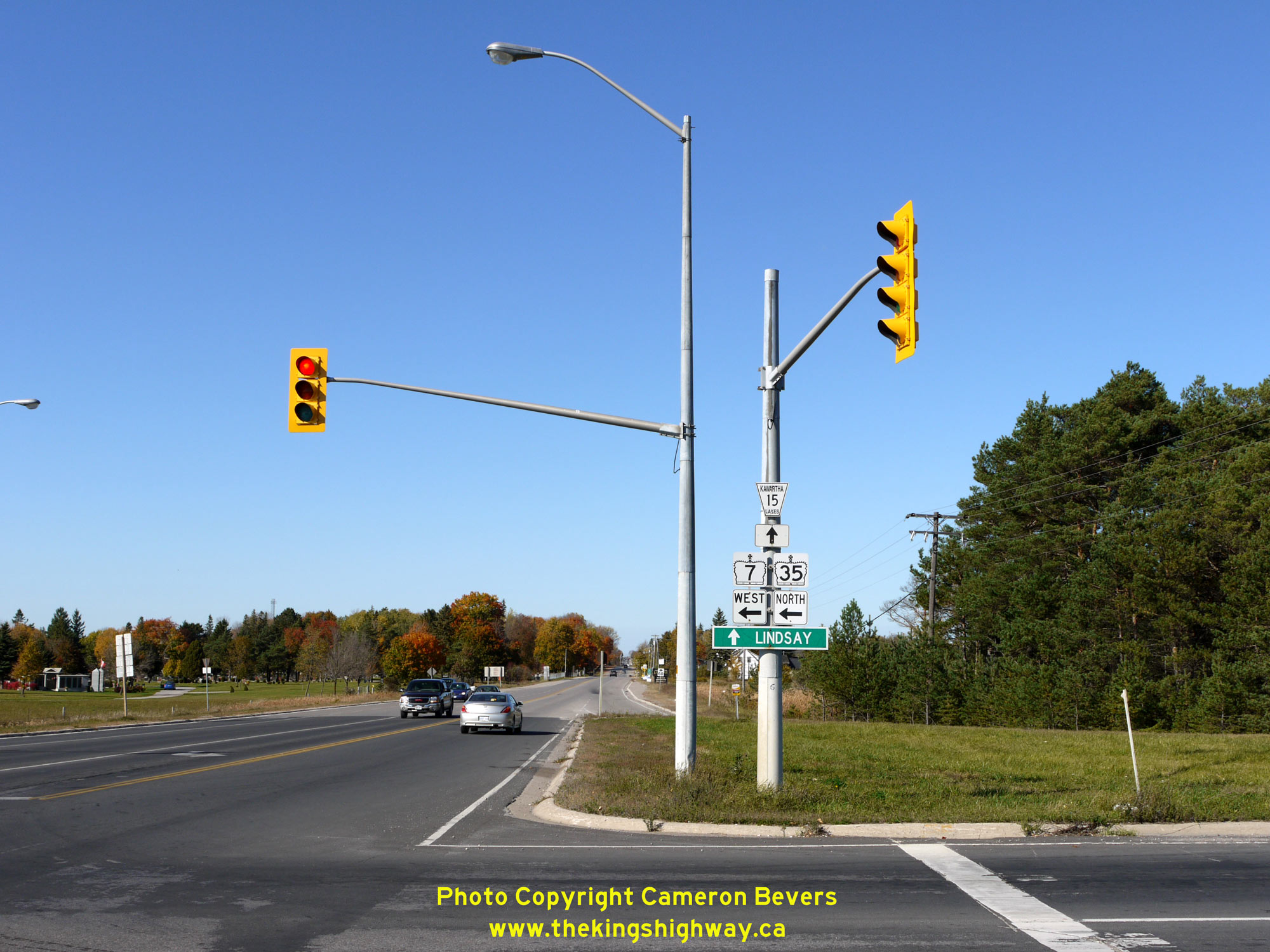
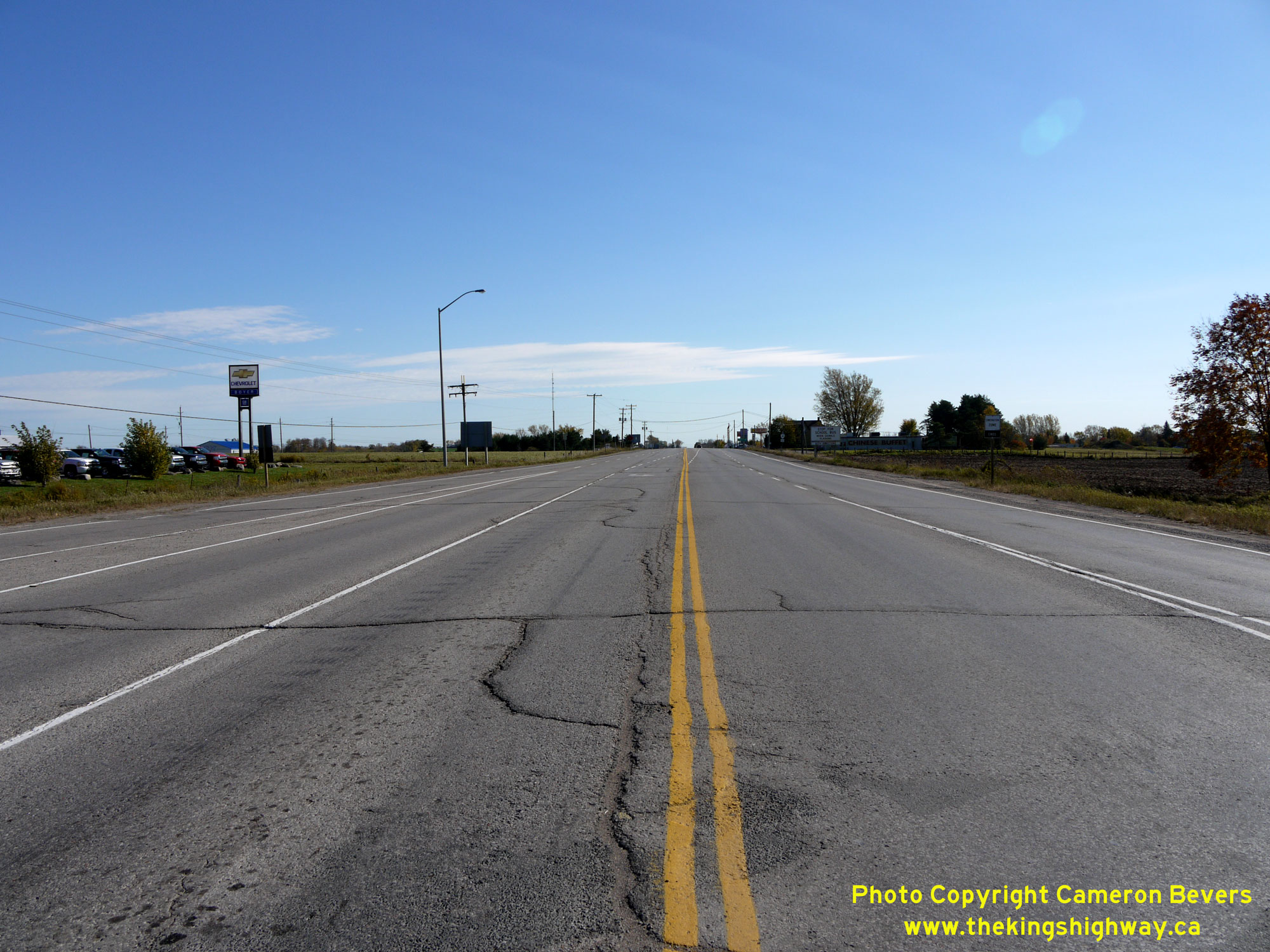
Left - Junction sign assembly at the Hwy 7 & Hwy 35 Junction, facing north. Following the decommissioning and transfer of Hwy 7B & Hwy 35B in the 1990s,
the signed route via Lindsay Street was discontinued at this junction. The former highway was renamed Victoria County Road 15 (now known as Kawartha Lakes Road 15).
See an Enlarged Photo Here. (Photograph taken on October 10, 2010 - © Cameron Bevers) Right - Facing south along Hwy 35 towards Newcastle from the Hwy 7 Junction near Lindsay. While Hwy 35 between Newcastle and Lindsay is a modern arterial highway today, it wasn't always a good route. Early motorists using Hwy 35 south of Lindsay would recall a dusty, pot-holed gravel road, with numerous sharp turns and a poor alignment. In fact, many sections of the original highway were in such poor condition that they were abandoned altogether when Hwy 35 was rebuilt in the late 1950s. See an Enlarged Photo Here. (Photograph taken on October 10, 2010 - © Cameron Bevers) 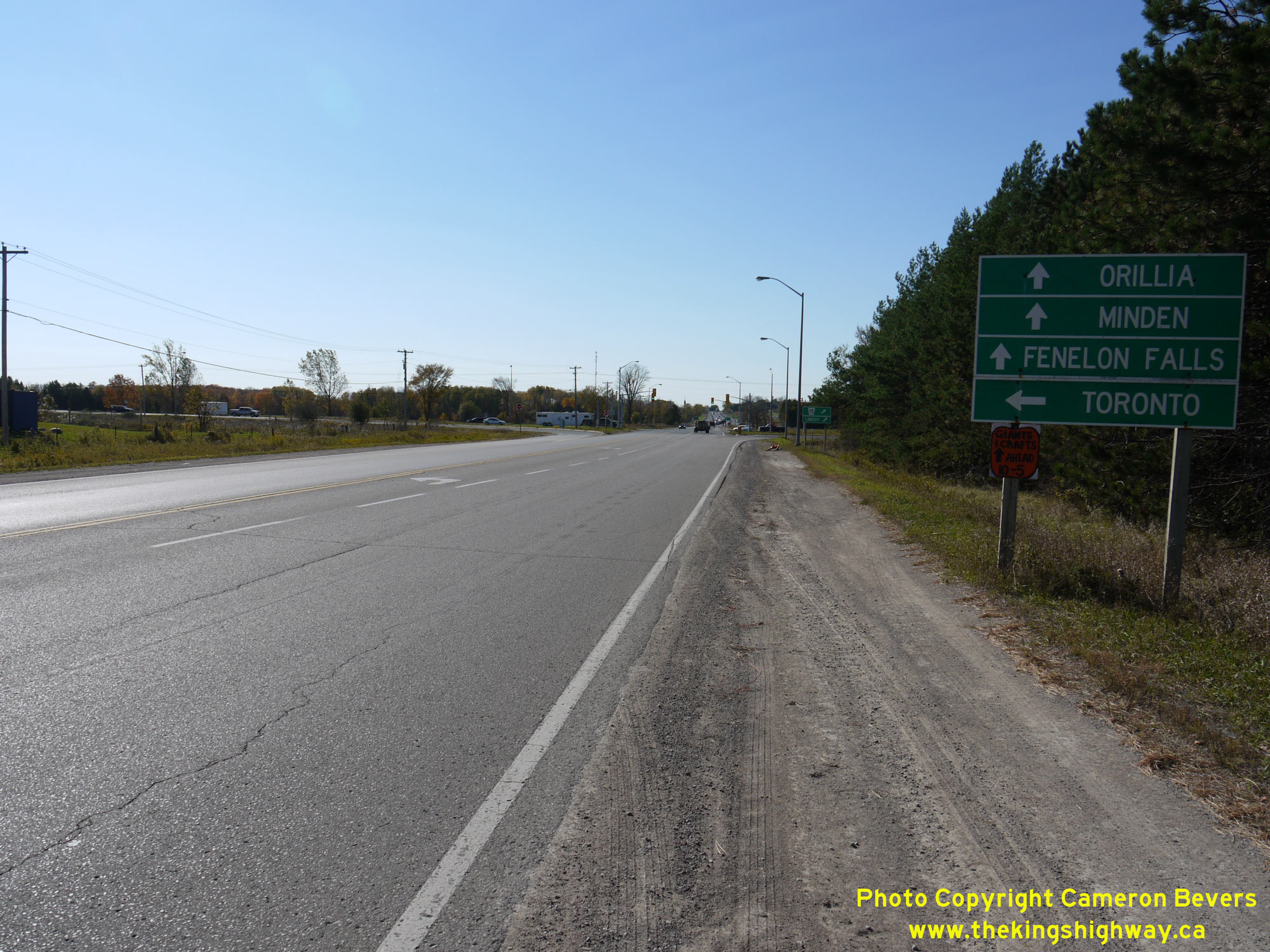
Left - Destination guide signs along westbound Hwy 7 approaching the Hwy 35 Junction. Through traffic on Hwy 7 and traffic bound for Hwy 35 North are signed
straight ahead, while traffic bound for Newcastle is signed via Hwy 35 South at left. Lindsay is signed to the north via Lindsay Street (Hwy 7B & Hwy 35B). See an
Enlarged Photo Here. (Photograph taken on October 10, 2010 - © Cameron Bevers) Right - Facing west along Hwy 7 towards the Hwy 35 South Junction near Lindsay. Historically, Hwy 7 curved to the right at this point and joined Hwy 35. Both highways continued north into Lindsay via an overlapped, concurrent route. As part of the Trans-Canada Highway's construction in the 1950s, a new bypass was constructed around the southern side of Lindsay. Rather than curve to the right, through traffic on the Trans-Canada Highway could continue straight ahead via the Lindsay Bypass to avoid the congested downtown area. The Lindsay Bypass was unofficially made available to public travel as a gravel highway in the early Summer of 1958. Final paving of the bypass was completed in September, with the new highway officially opened to traffic on October 10, 1958. Following the completion of the Lindsay Bypass, the original highway route through Lindsay was renumbered as Hwy 7B & Hwy 35B. See an Enlarged Photo Here. (Photograph taken on October 10, 2010 - © Cameron Bevers) 

Left - Destination guide signs on the Lindsay Bypass facing east, approaching the Hwy 35 South Junction. At this intersection, Hwy 7 & Hwy 35 part ways
again, with Hwy 35 turning right and heading south towards Newcastle. Traffic continues straight ahead towards Peterborough via Hwy 7, while traffic bound for
Downtown Lindsay can turn left and follow Lindsay Street (Hwy 7B & Hwy 35B). See an
Enlarged Photo Here. (Photograph taken on October 10, 2010 - © Cameron Bevers) Right - Facing west along the Lindsay Bypass (Hwy 7 & Hwy 35) from the Hwy 35 South Junction near Lindsay. Built as part of the Trans-Canada Highway's Central Ontario Route, the 5-mile Lindsay Bypass formed a strategic bypass around the southern side of town. The first construction contract for the Lindsay Bypass was awarded in November 1956, with construction taking just under two years to complete. Grading for the new bypass was completed under Contract #1956-141, with final hot-mix asphalt paving completed along the bypass under Contract #1958-122. See an Enlarged Photo Here. (Photograph taken on October 10, 2010 - © Cameron Bevers) 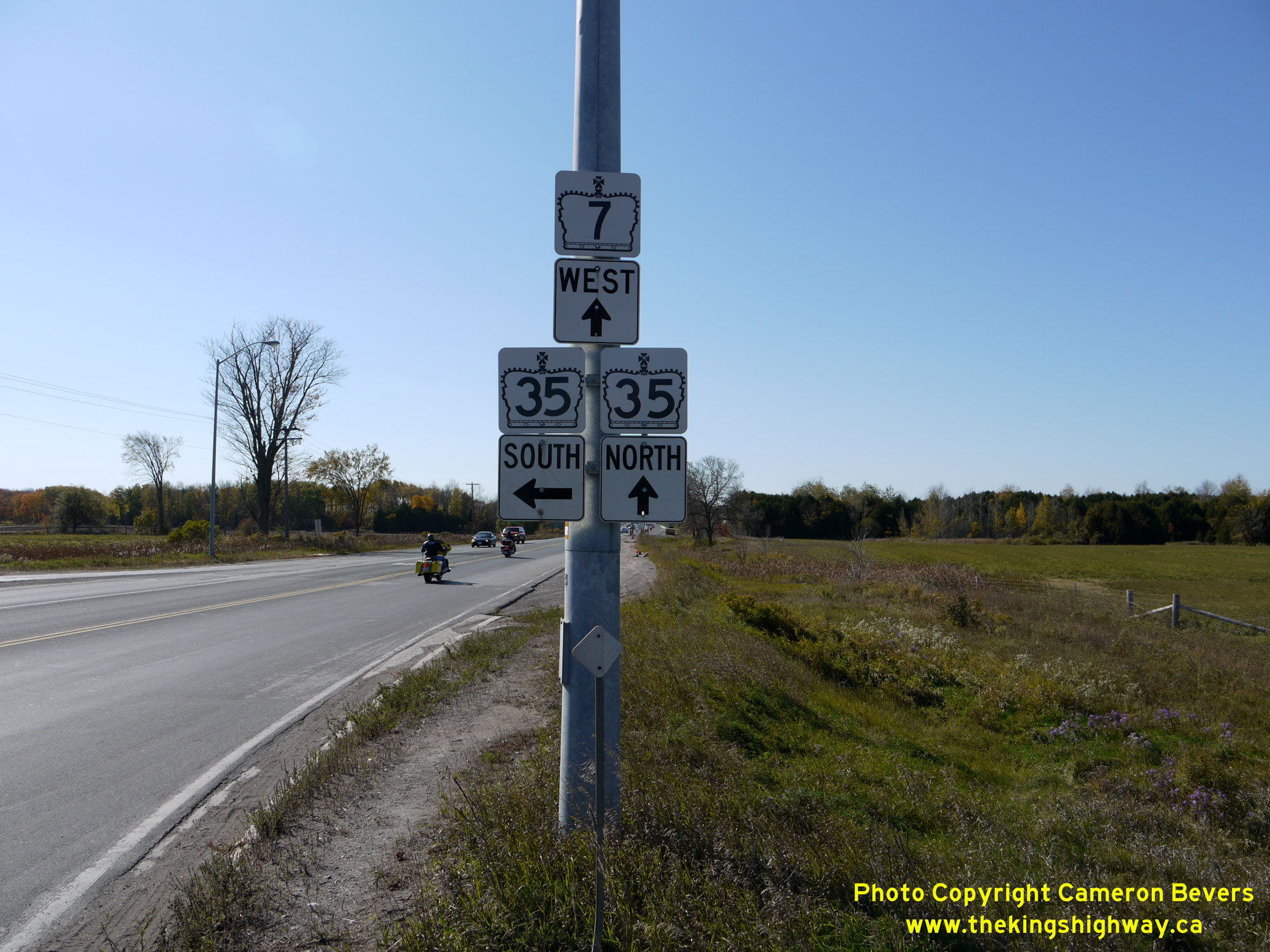

Left - Junction sign assembly at the eastern end of the Lindsay Bypass at the Hwy 7 & Hwy 35 Junction. Both Hwy 7 & Hwy 35 share an overlapped
concurrent route for a distance of about 5 km along the Lindsay Bypass. Although unsigned facing west at this highway junction, the Lindsay Bypass is part of the
Central Ontario Route of the Trans-Canada Highway. See an Enlarged Photo Here. (Photograph taken on October 10, 2010 - © Cameron Bevers) Right - Approaching the eastern terminus of the Lindsay Bypass at the Hwy 35 South Junction. At this junction, the Lindsay Bypass tied back into the original route of Hwy 7 coming out of Lindsay. From here, Hwy 7 continues east towards Peterborough more or less along its original 1920s alignment. See an Enlarged Photo Here. (Photograph taken on October 10, 2010 - © Cameron Bevers) 
Left - Turn-off junction sign assembly on southbound Lindsay Street (Hwy 7B & Hwy 35B) at the Lindsay Bypass. See an
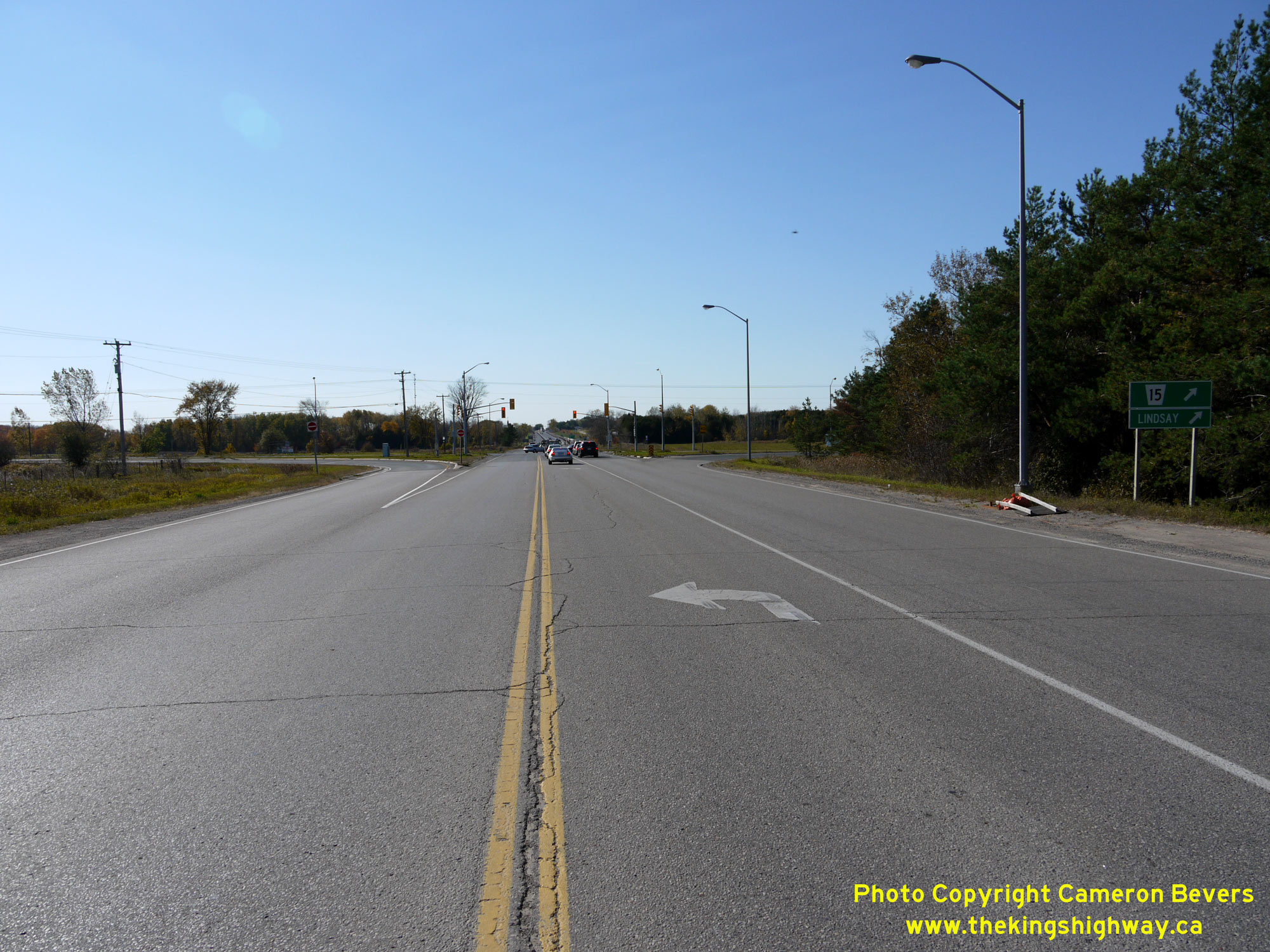
Enlarged Photo Here. (Photograph taken on October 10, 2010 - © Cameron Bevers) Right - Facing south along Lindsay Street (Hwy 7B & Hwy 35B) towards the Lindsay Bypass. At this intersection, traffic can either proceed south towards Newcastle via Hwy 35, turn left towards Peterborough via Hwy 7 East or turn right towards Orillia via Hwy 7 West and Hwy 35 North. This intersection was also the historical southern terminus of the Lindsay Business Route (Hwy 7B & Hwy 35B). See an Enlarged Photo Here. (Photograph taken on October 10, 2010 - © Cameron Bevers) 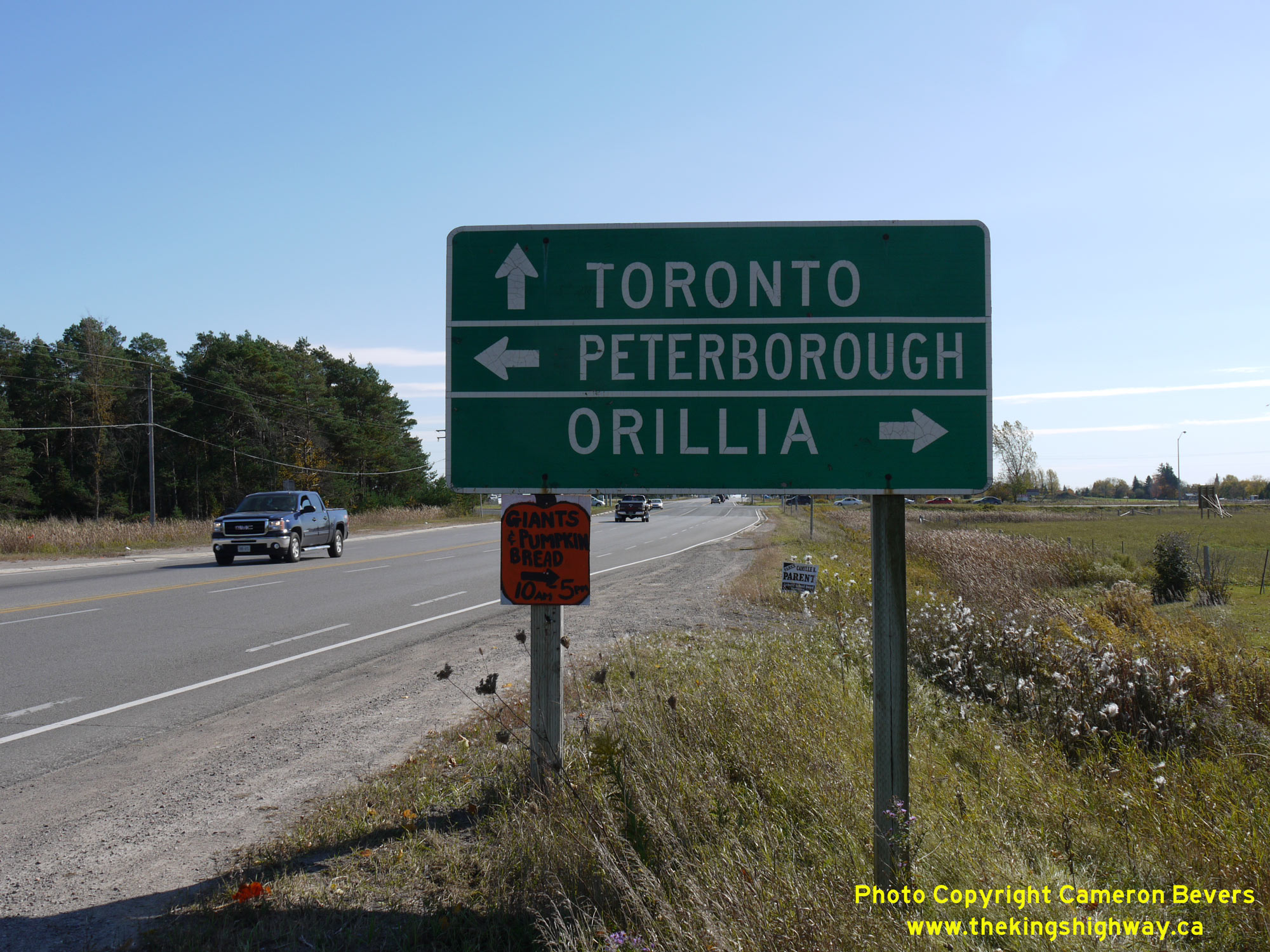
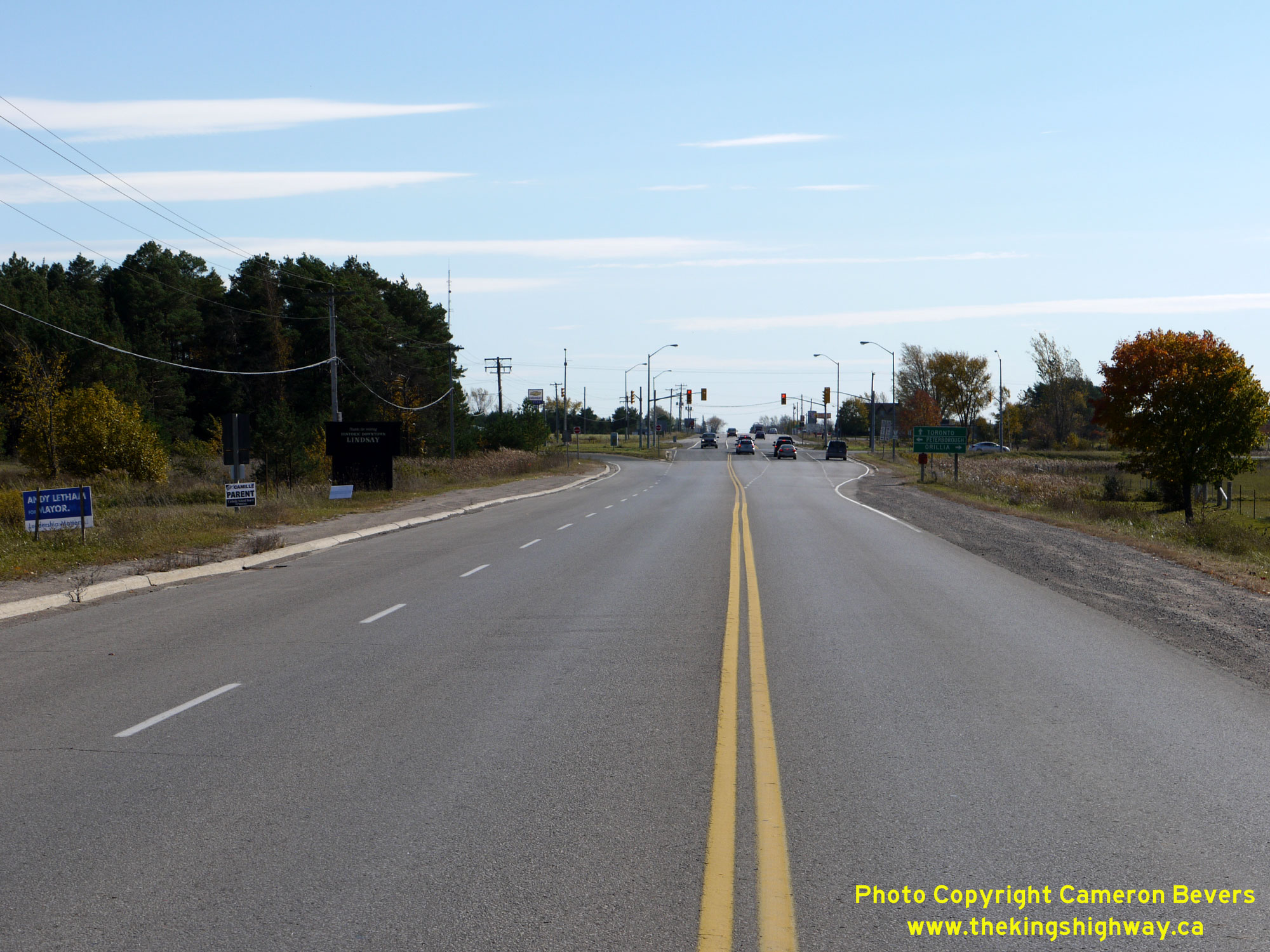
Left - An older destination guide sign on southbound Lindsay Street (Hwy 7B & Hwy 35B) approaching the Lindsay Bypass. See an
Enlarged Photo Here. (Photograph taken on October 10, 2010 - © Cameron Bevers) Right - Facing south along Lindsay Street (Hwy 7B & Hwy 35B) approaching the Hwy 7 & Hwy 35 Junction near Lindsay. At one time, Hwy 7 & Hwy 35 met at a Y-junction at this point, where Hwy 7 curved off to the left towards Peterborough, while Hwy 35 continued straight ahead towards Newcastle. It is believed that the curved diversion for Hwy 7 was built in 1934, soon after a railway line through this area was taken out of service. Previously, Hwy 7 crossed this railway line within the intersection. This 1930s highway curve was closed to traffic when the Lindsay Bypass was constructed in the late 1950s. Today, there is almost no evidence that there ever was a large highway curve located here. See an Enlarged Photo Here. (Photograph taken on October 10, 2010 - © Cameron Bevers) 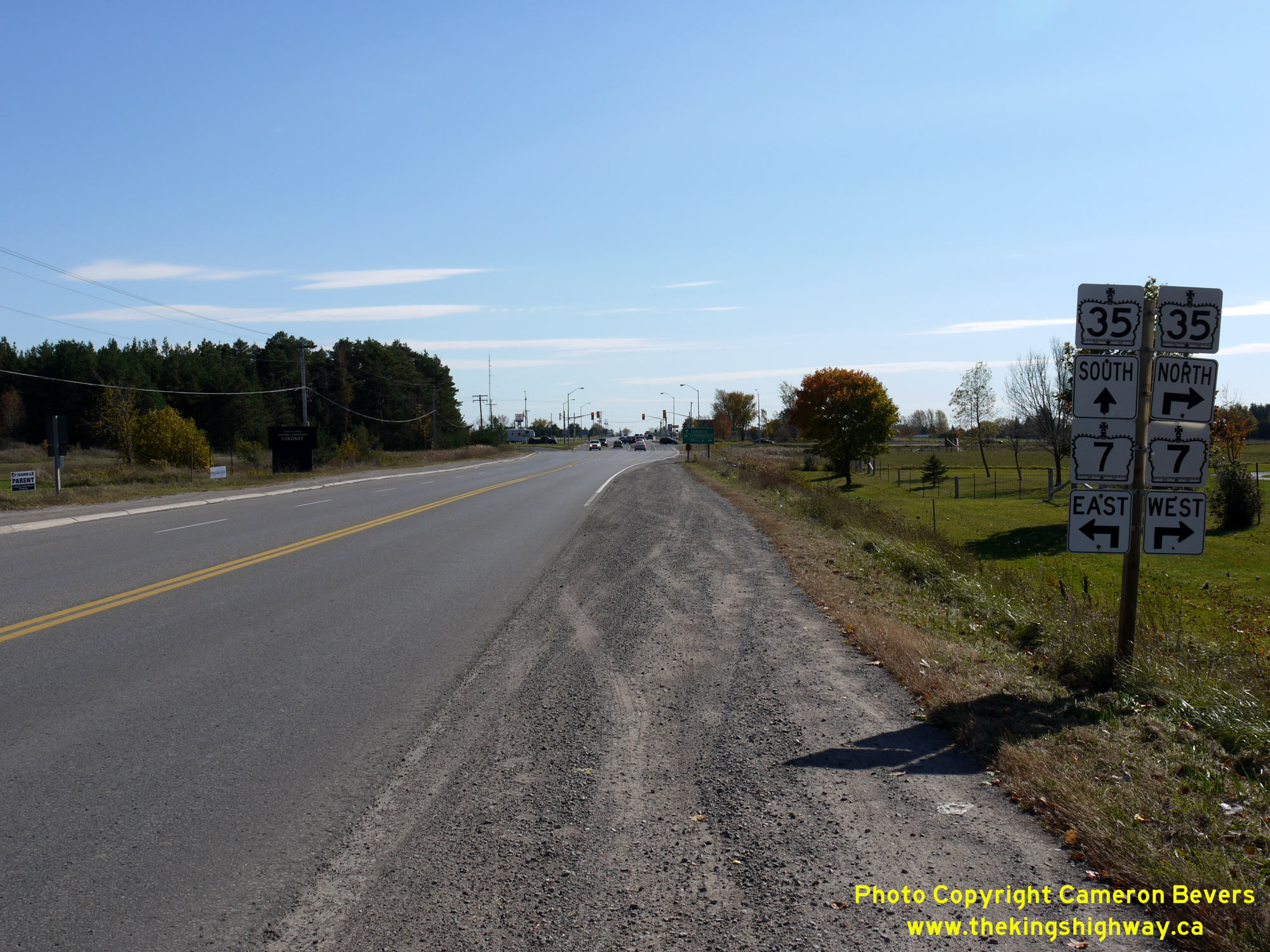

Left - Advance junction sign assembly on southbound Lindsay Street (Hwy 7B & Hwy 35B) approaching the Lindsay Bypass. See an
Enlarged Photo Here. (Photograph taken on October 10, 2010 - © Cameron Bevers) Right - Facing north along Lindsay Street (Hwy 7B & Hwy 35B) from the Lindsay Bypass (Hwy 7 & Hwy 35). See an Enlarged Photo Here. (Photograph taken on October 10, 2010 - © Cameron Bevers) 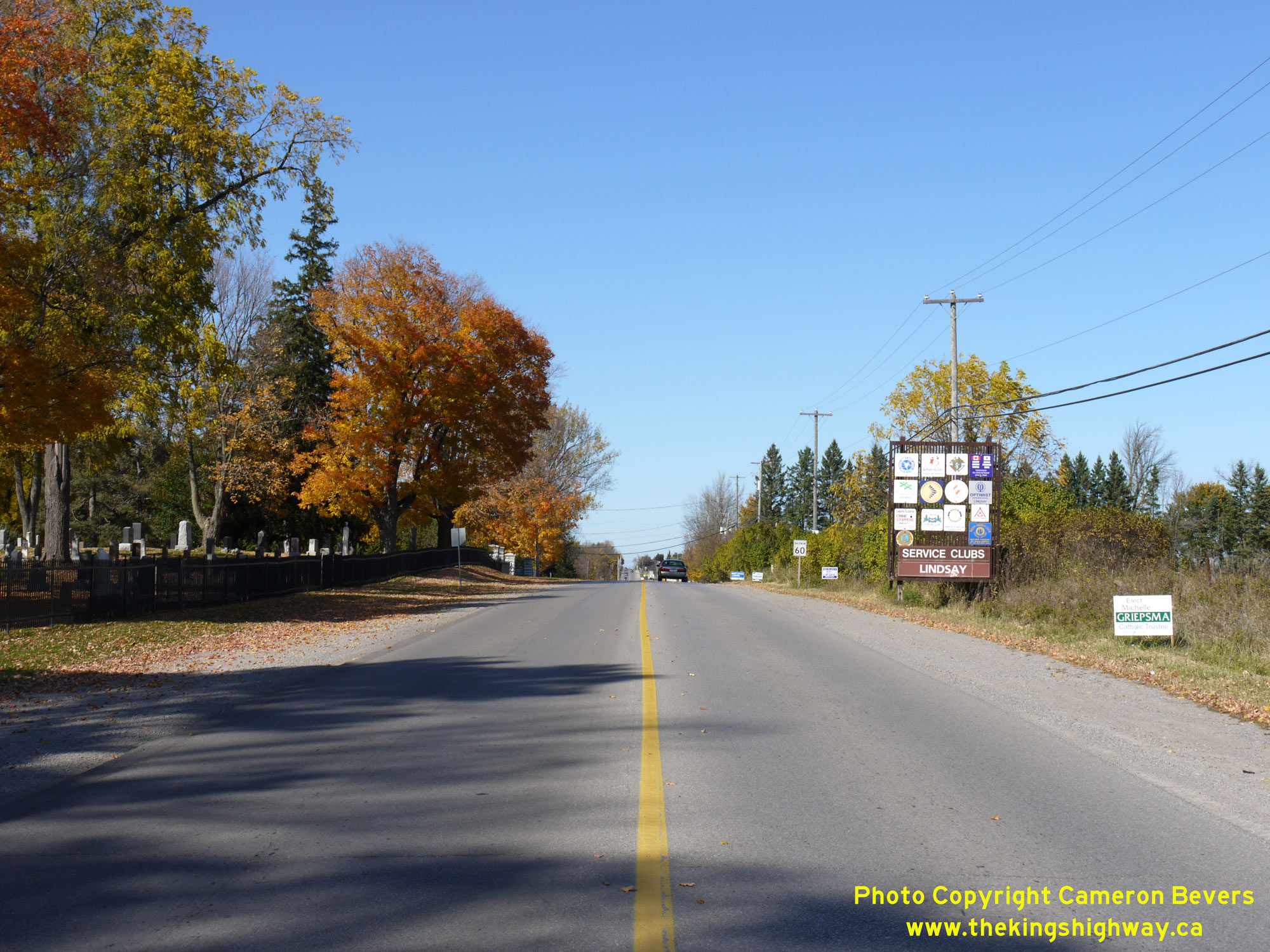
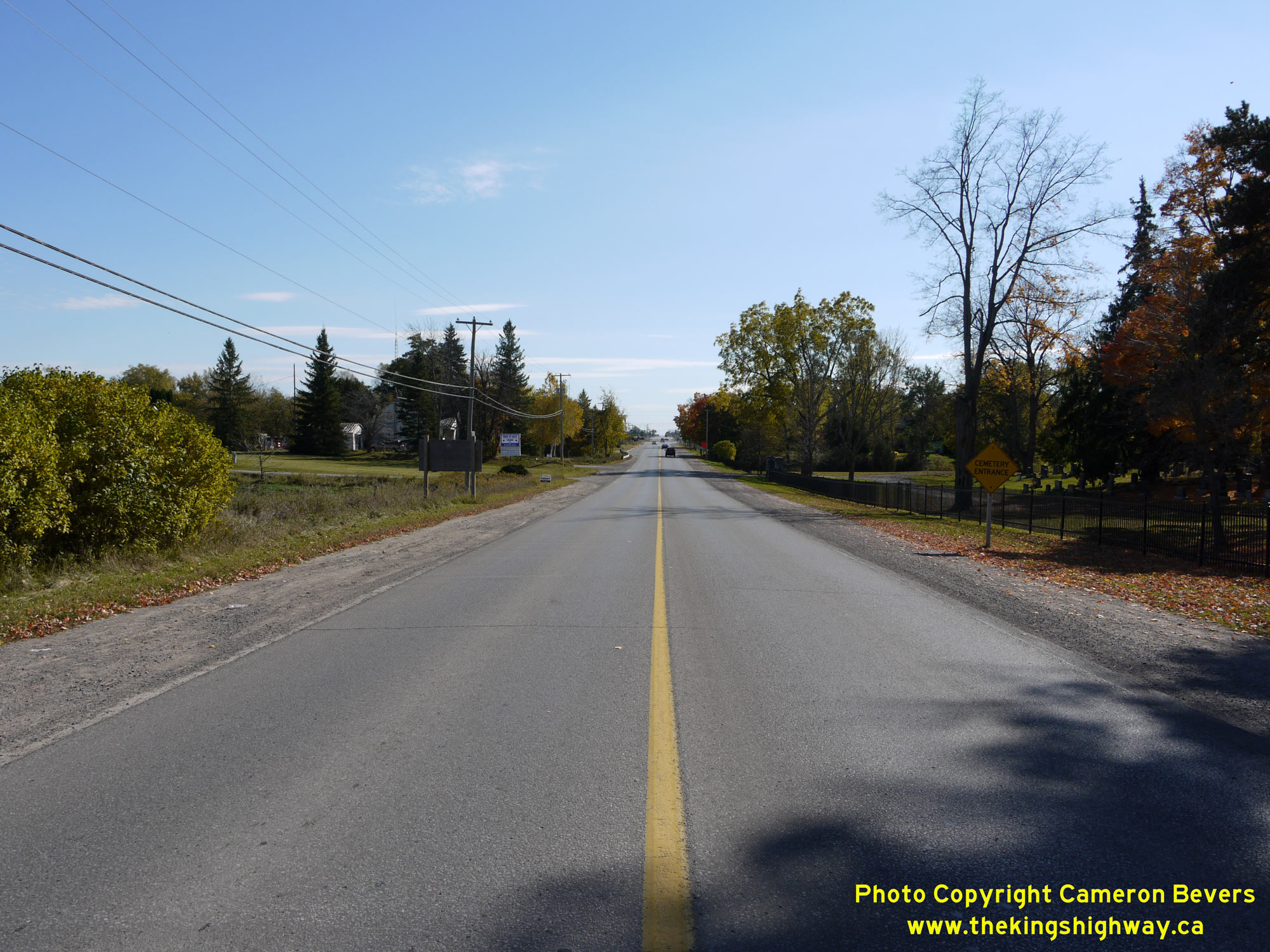
Left - Facing north along Lindsay Street (Hwy 7B & Hwy 35B) approaching the start of the Municipal Connecting Link. Despite being bypassed in 1958, the
province retained ownership of this short section of Hwy 7B & Hwy 35B south of Lindsay's town limits right up until 1997, when jurisdiction over the highway was
transferred to the County of Victoria. The Municipal Connecting Link began about 1.3 km north of the Lindsay Bypass, with the balance of the highway through the urban
area maintained by the Town of Lindsay. See an Enlarged Photo Here. (Photograph taken on October 10, 2010 - © Cameron Bevers) Right - View of Lindsay Street (Hwy 7B & Hwy 35B) facing south. South of the Scugog River Bridge, the highway leaves town and intersects with the Lindsay Bypass (Hwy 7 & Hwy 35) about 1.5 km ahead. Note the yellow warning sign for the "Cemetery Entrance" at right. This is one of the few warning signs remaining in Ontario which still uses text to convey the sign's message. Over the decades, symbols and graphics have replaced most text on warning signs. However, the "Cemetery Entrance" sign is a notable exception, as traffic engineers have long struggled with ways to accurately convey the intended message with a graphic that can be universally understood by motorists. See an Enlarged Photo Here. (Photograph taken on October 10, 2010 - © Cameron Bevers) 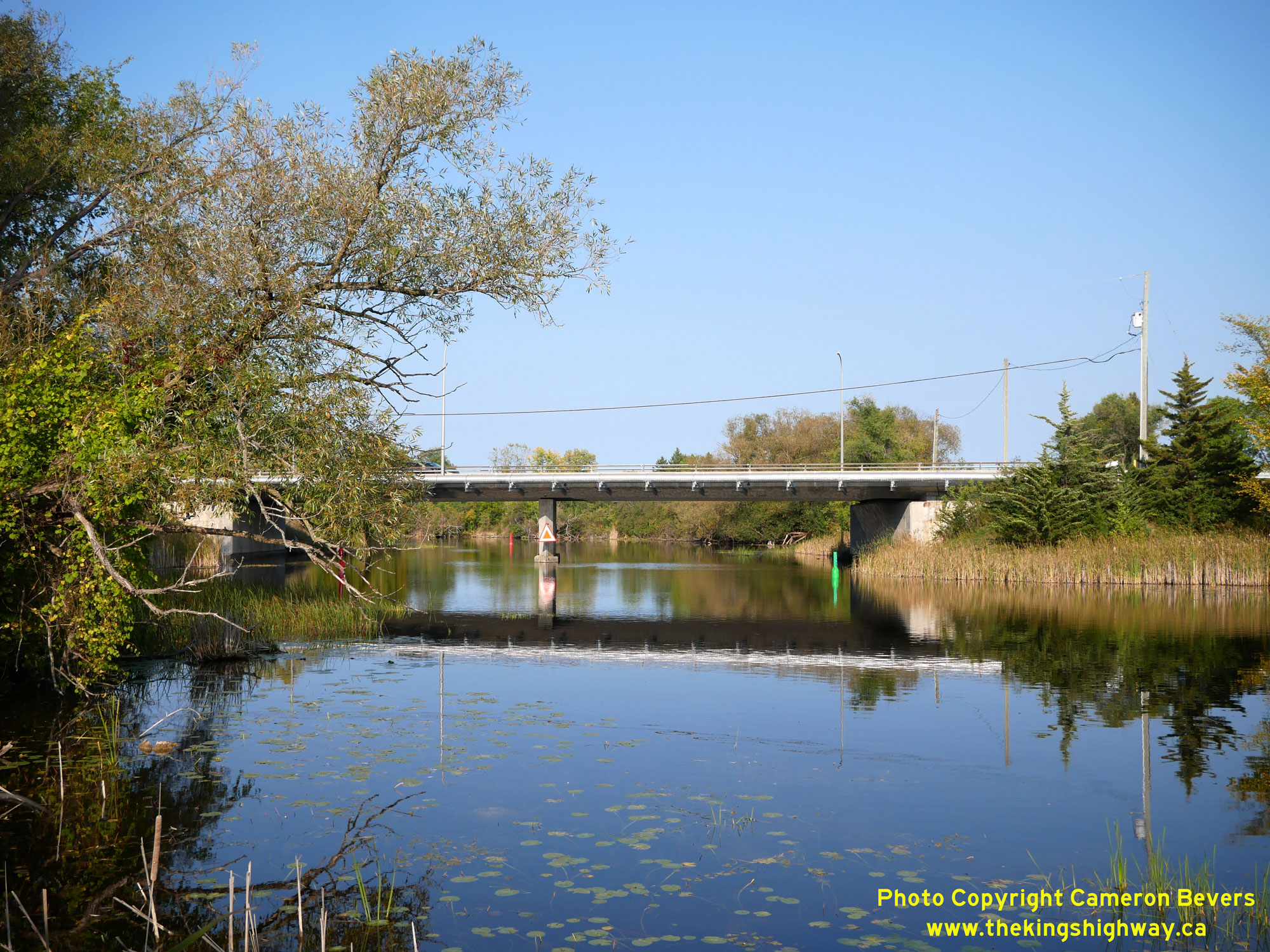
Left - Western side of the Scugog River Bridge (Site #32-98) on Lindsay Street (Hwy 7B & Hwy 35B). See an
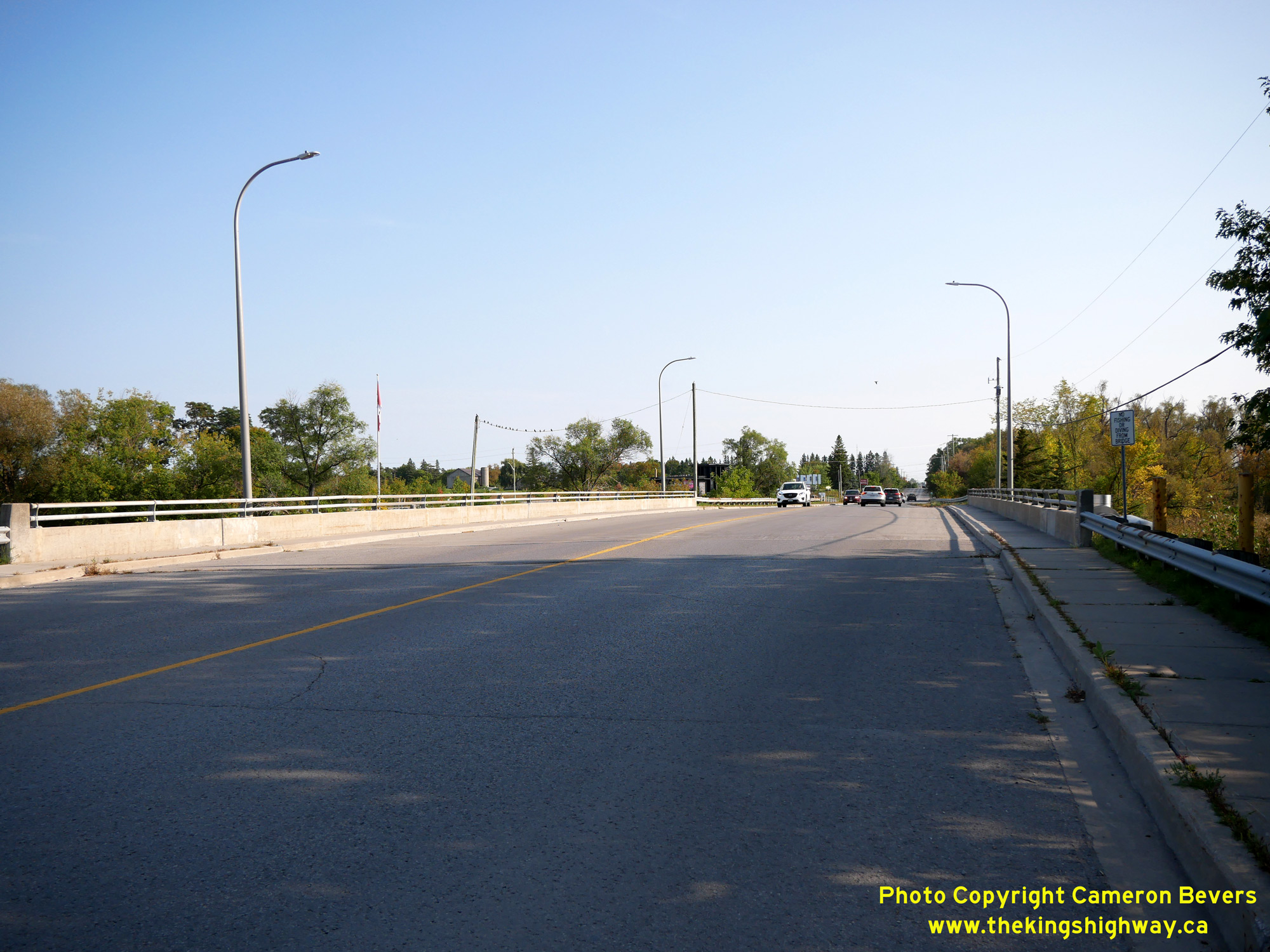
Enlarged Photo Here. (Photograph taken on September 22, 2023 - © Cameron Bevers) Right - Facing south across the Scugog River Bridge on Lindsay Street (Hwy 7B & Hwy 35B). The former town limits of Lindsay lie a few hundred metres south of the Scugog River Bridge. The former Town of Lindsay was amalgamated with all other lower-tier municipalities within Victoria County to form a single-tier municipality known as the City of Kawartha Lakes in 2001. See an Enlarged Photo Here. (Photograph taken on September 22, 2023 - © Cameron Bevers) 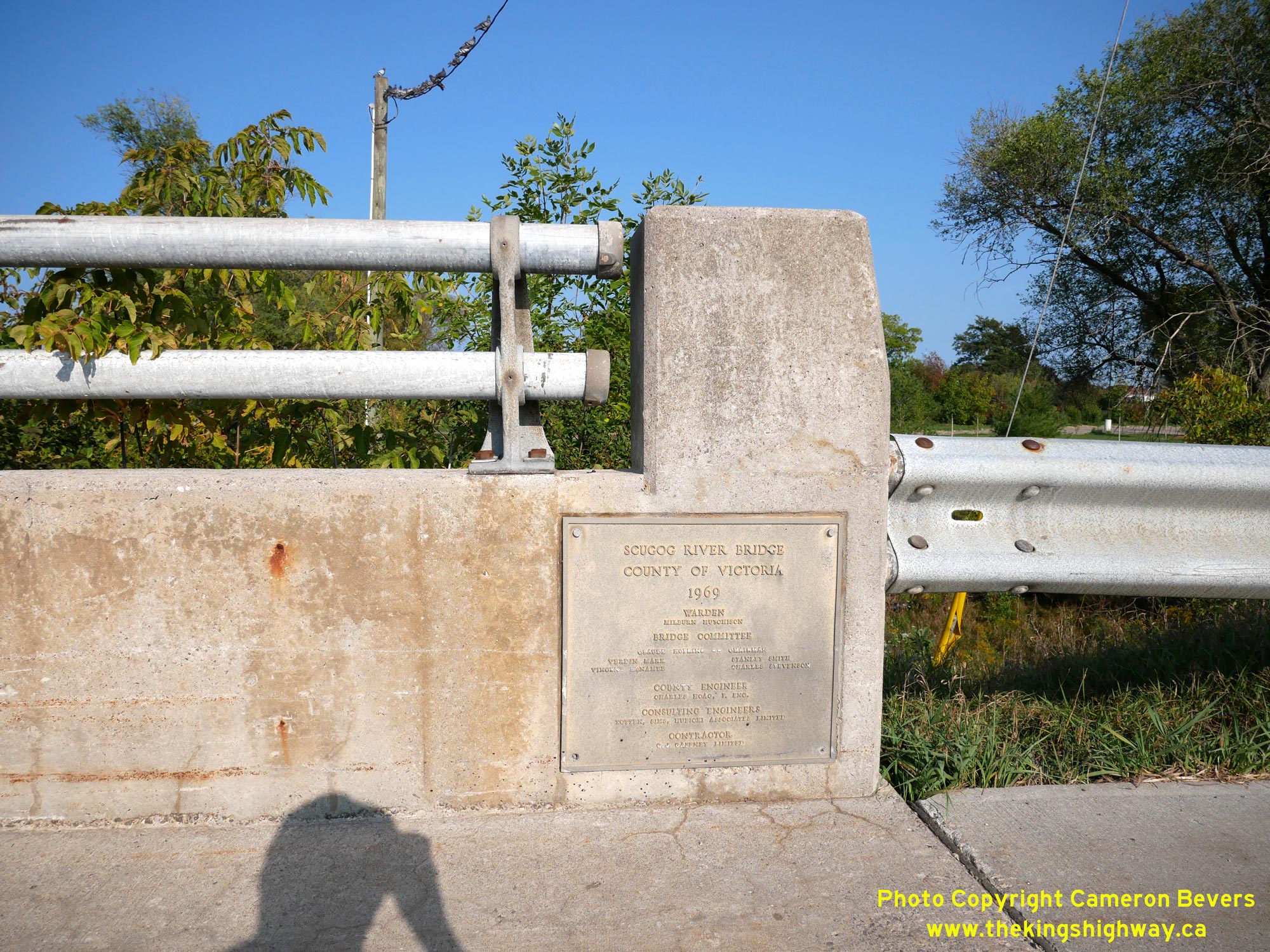

Left - Plaque commemorating the completion of the Scugog River Bridge by the County of Victoria in 1969. Previously, a three-span concrete rigid frame bridge
known as the Ops Bridge carried the highway across the Scugog River and into Lindsay. The structure was built by the Department of Highways of Ontario (DHO) under
Contract #1931-71, at an original construction cost of $27,550 - the equivalent of about $750,000 in 2026 Dollars. At the time of the Ops Bridge's completion in 1932,
it was briefly the longest concrete rigid frame bridge built by the DHO, with a total length of 150 feet. The bridge featured a 30-foot roadway width and a 5-foot
sidewalk. See an Enlarged Photo Here. (Photograph taken on September 22, 2023 - © Cameron Bevers) Right - Eastern side of the Scugog River Bridge on Lindsay Street (Hwy 7B & Hwy 35B). The current Scugog River Bridge is a two-span post-tensioned concrete structure. A key advantage of this type of bridge design is the shallow deck slab, which allowed for the maximum possible vertical clearance for the marine navigation channel below the structure. The Scugog River links nearby Lake Scugog with the Trent-Severn Waterway via a canal lock in Lindsay. See an Enlarged Photo Here. (Photograph taken on September 22, 2023 - © Cameron Bevers) 
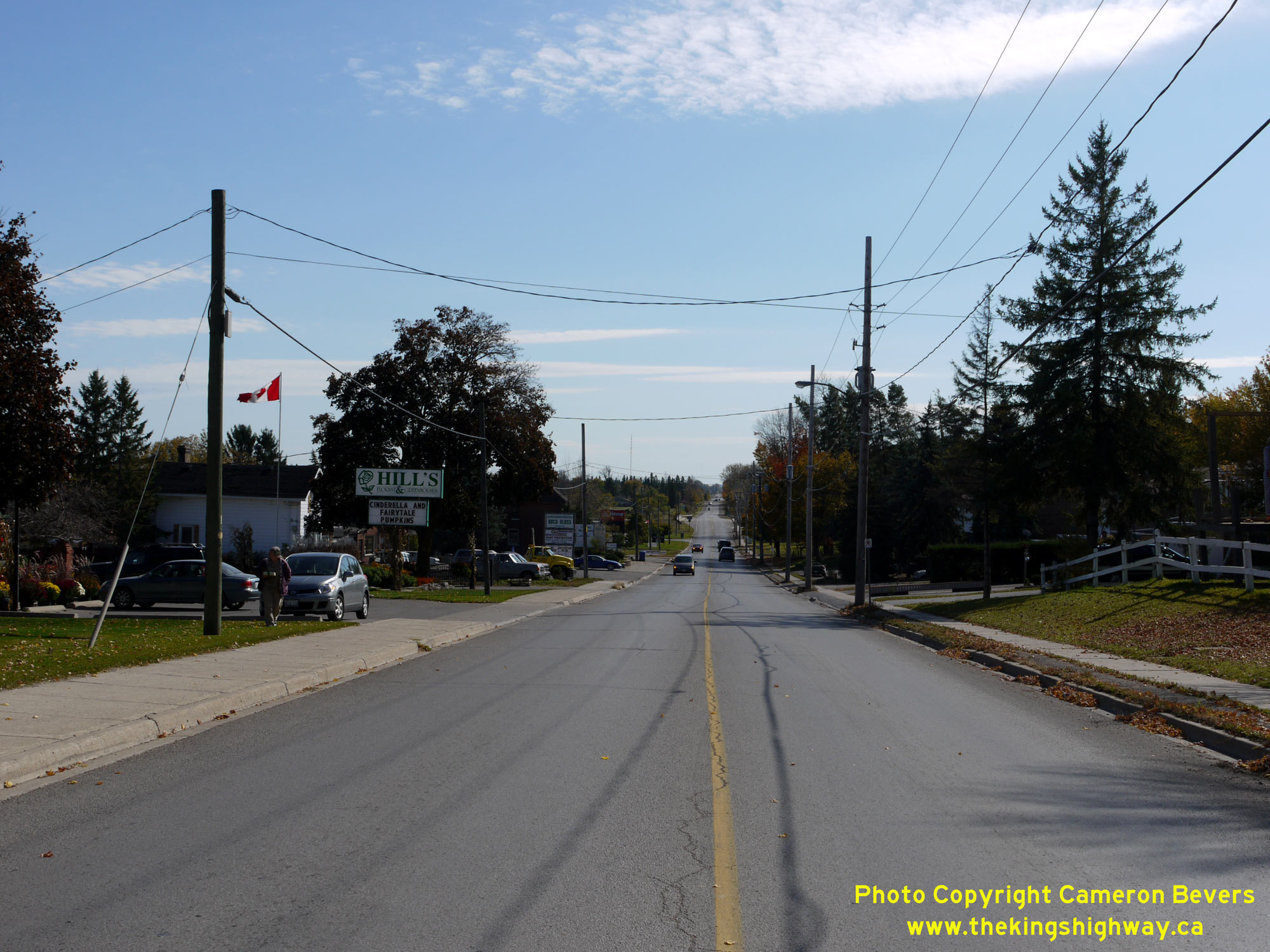
Left - Facing north towards Downtown Lindsay across the Scugog River Bridge on Hwy 7B & Hwy 35B. This structure was originally designed to accommodate a
four-lane roadway in the future. Post-tensioned concrete structures are notoriously challenging to widen once built. When selecting this bridge type, designers have
to be particularly forward-thinking when it comes to the possibility of changing traffic needs throughout the bridge's anticipated design life. See an
Enlarged Photo Here. (Photograph taken on September 22, 2023 - © Cameron Bevers) Right - Facing south along Lindsay Street (Hwy 7B & Hwy 35B) from Mary Street in Lindsay. See an Enlarged Photo Here. (Photograph taken on October 10, 2010 - © Cameron Bevers) 
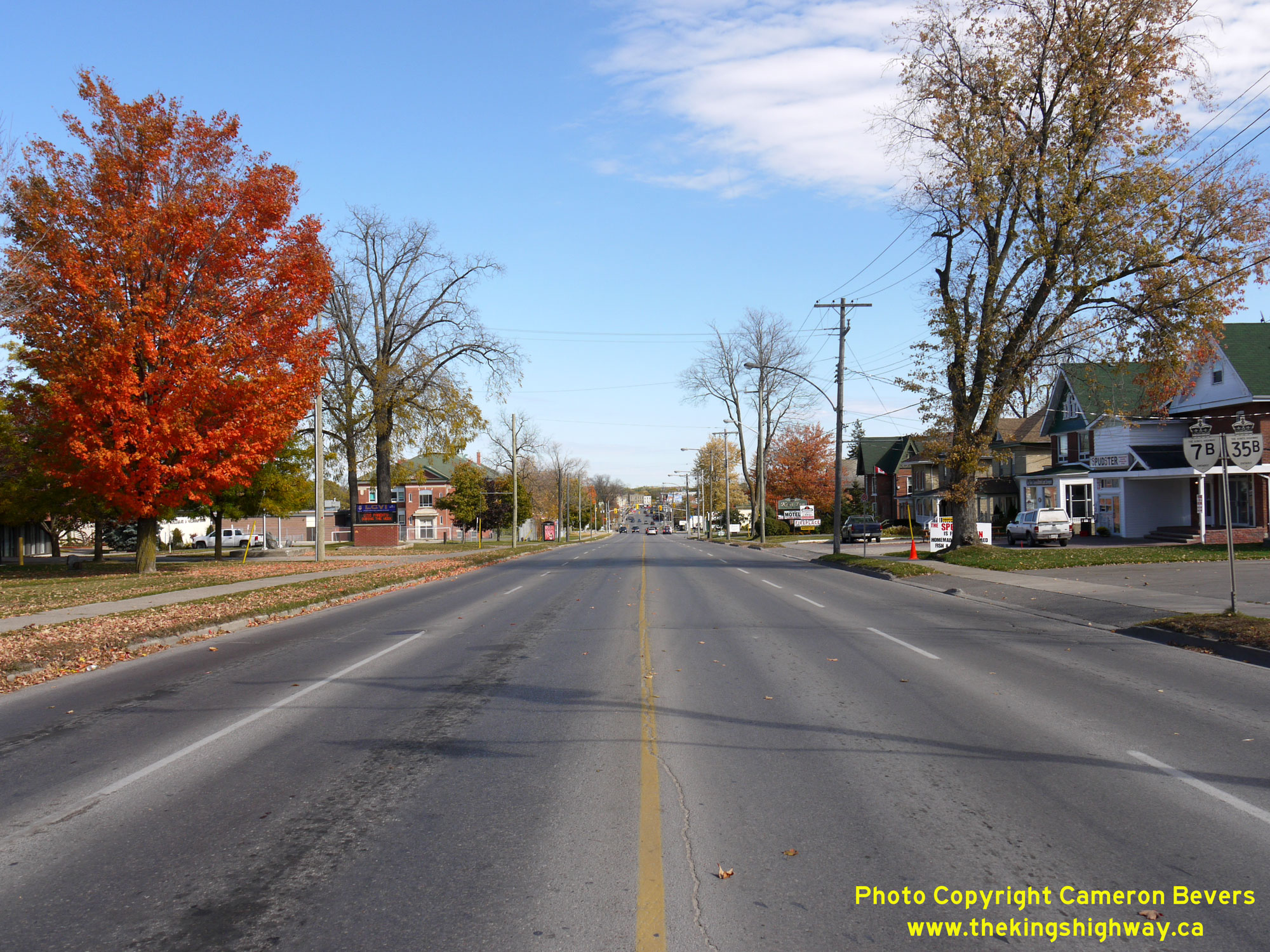
Left - Facing north along Lindsay Street (Hwy 7B & Hwy 35B) from Mary Street in Lindsay. Note the pair of King's Highway shields in front of the Dairy
Queen at right for Hwy 7B & Hwy 35B. Provincial jurisdiction over Hwy 7B & Hwy 35B south of Lindsay ended in 1997, but the Lindsay Business Route was still
signed through town for many years thereafter. See an Enlarged Photo Here. (Photograph taken on October 10, 2010 - © Cameron Bevers) Right - View of Kent Street (Hwy 7B & Hwy 35B) facing east from Adelaide Street in Lindsay. See an Enlarged Photo Here. (Photograph taken on October 10, 2010 - © Cameron Bevers) 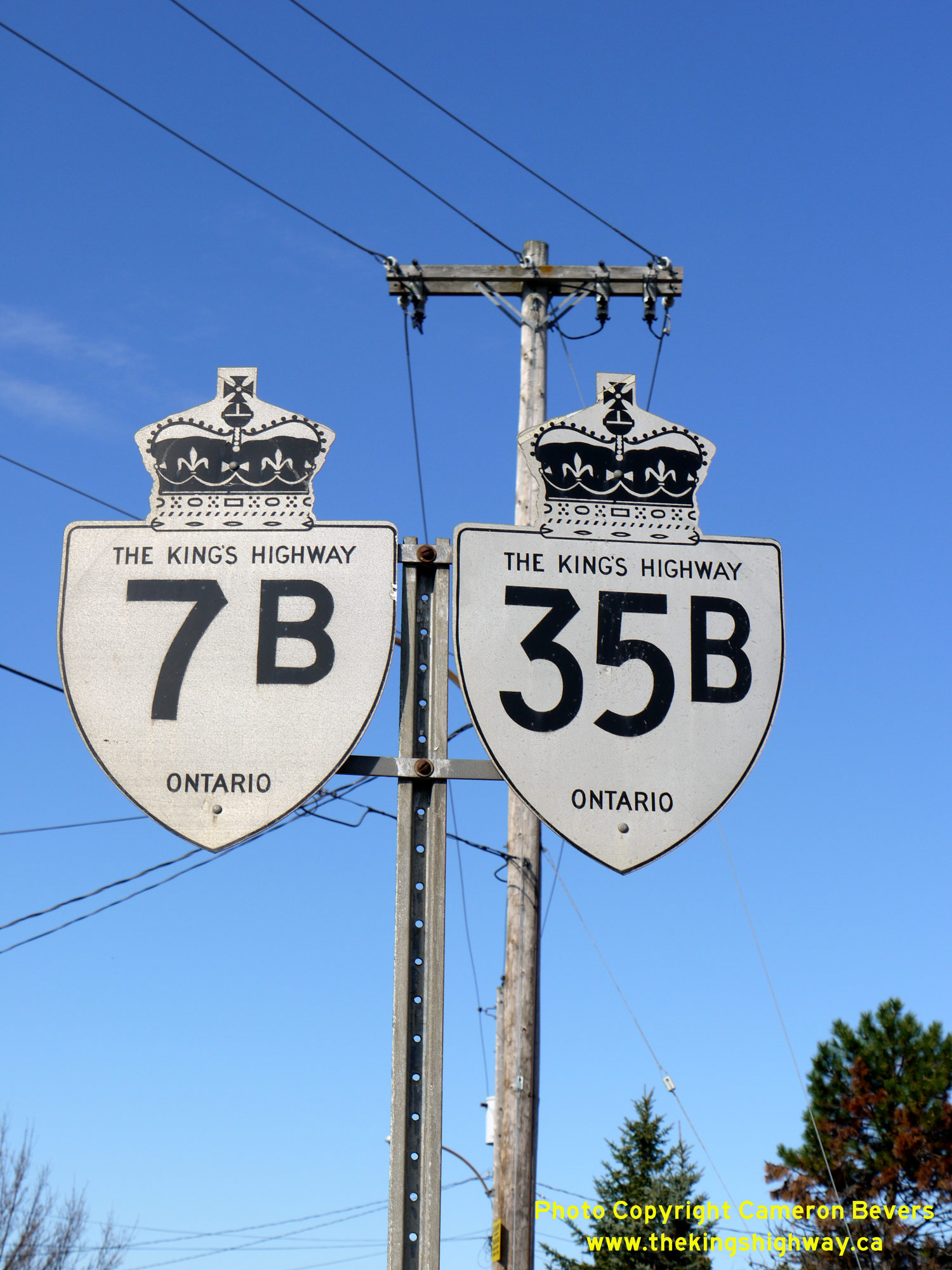
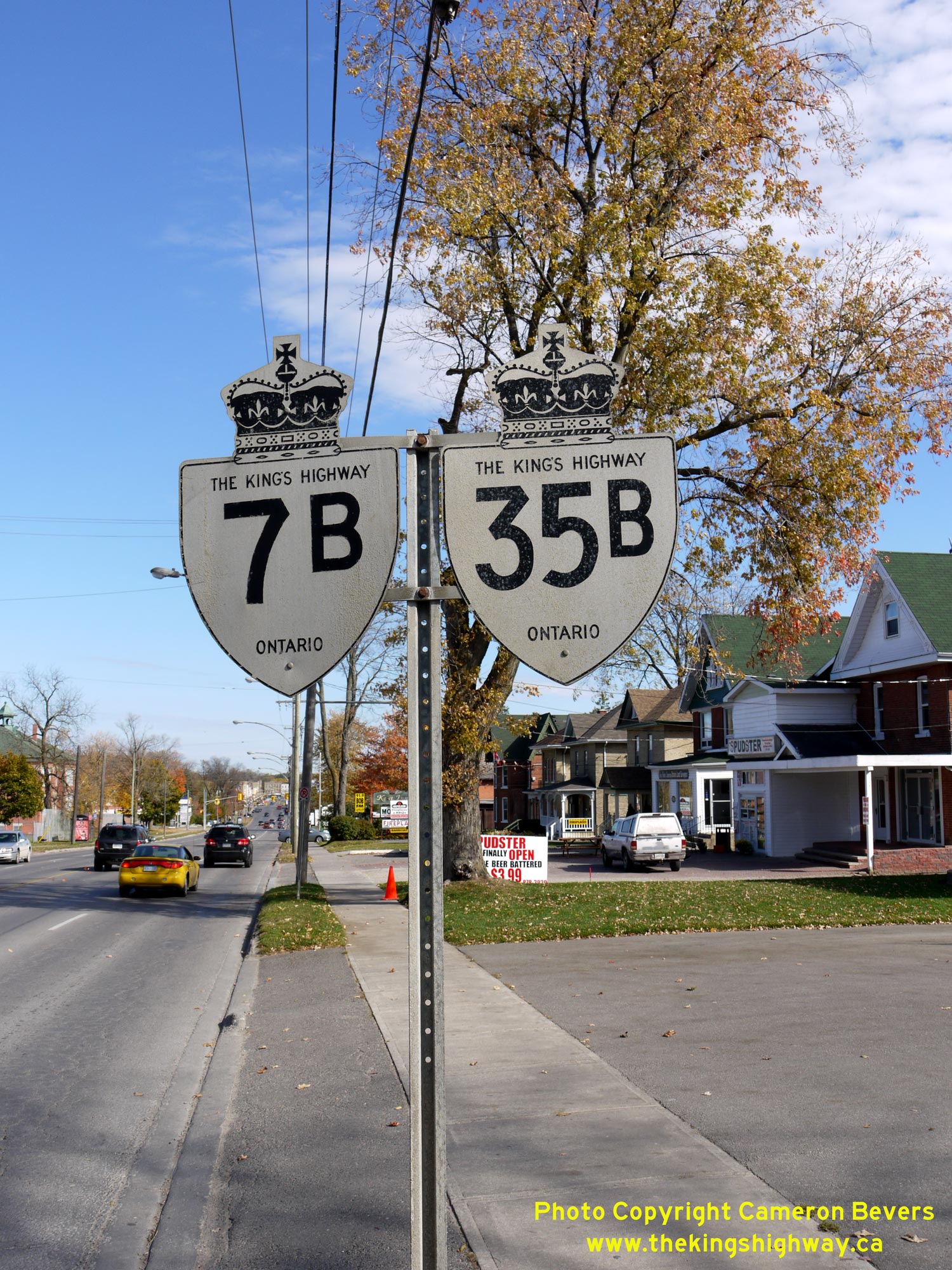
Left - Dual King's Highway route markers for Hwy 7B & Hwy 35B on Lindsay Street. Signed Business Routes typically feature the "parent" highway number
followed by a "B" suffix. These routes are intended to guide motorists into and through a bypassed town or city and then bring them back out to the main highway. Up
until the 1970s, these B-routes were very commonly used for old sections of highway left behind, once an urbanized area was bypassed by a new highway. The practice of
signing B-routes has become much less prevalent in more recent years. See an
Enlarged Photo Here. (Photograph taken on October 10, 2010 - © Cameron Bevers) Right - Dual King's Highway route markers for Hwy 7B & Hwy 35B on Kent Street in Lindsay. See an Enlarged Photo Here. (Photograph taken on October 10, 2010 - © Cameron Bevers) 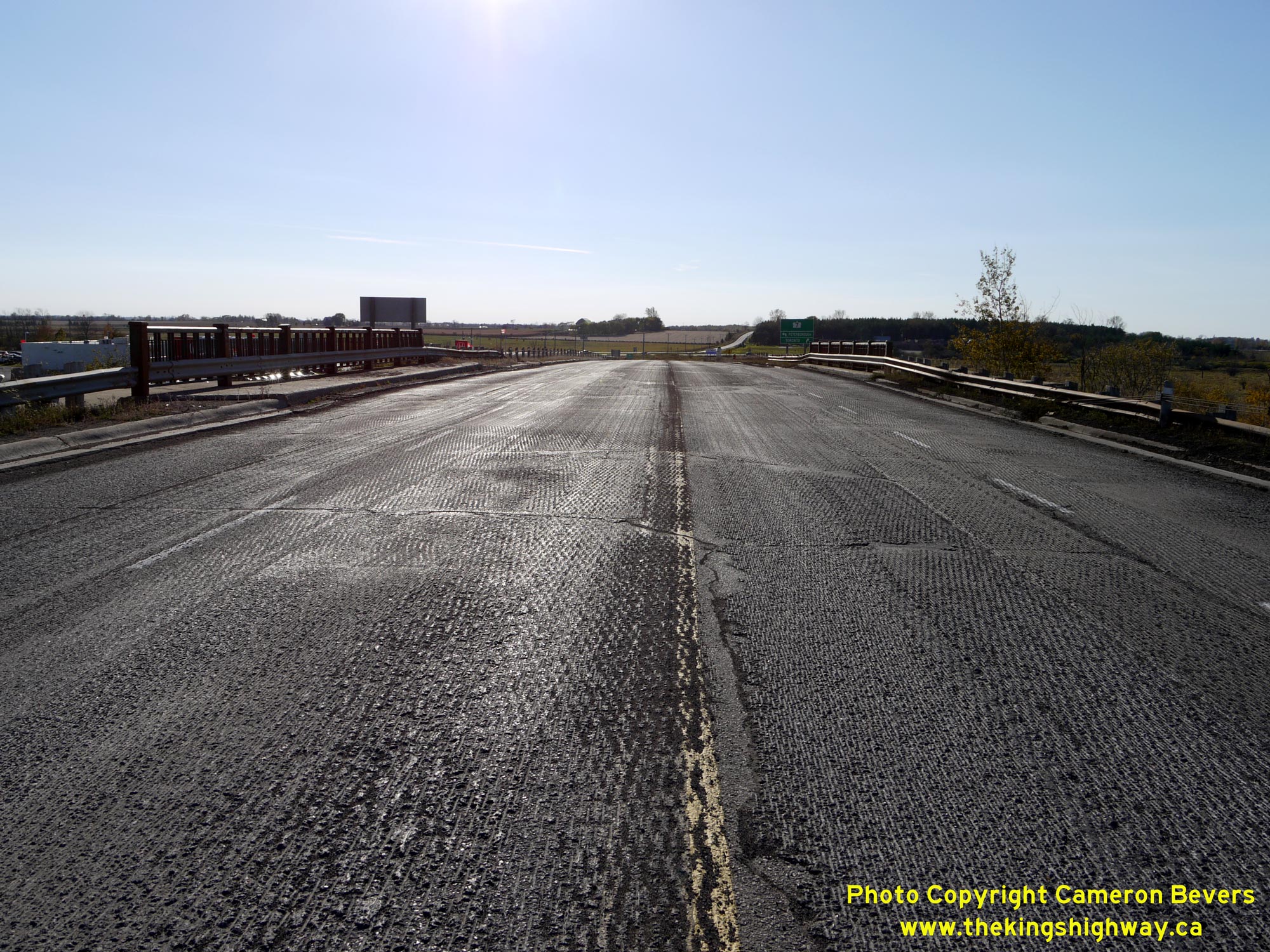
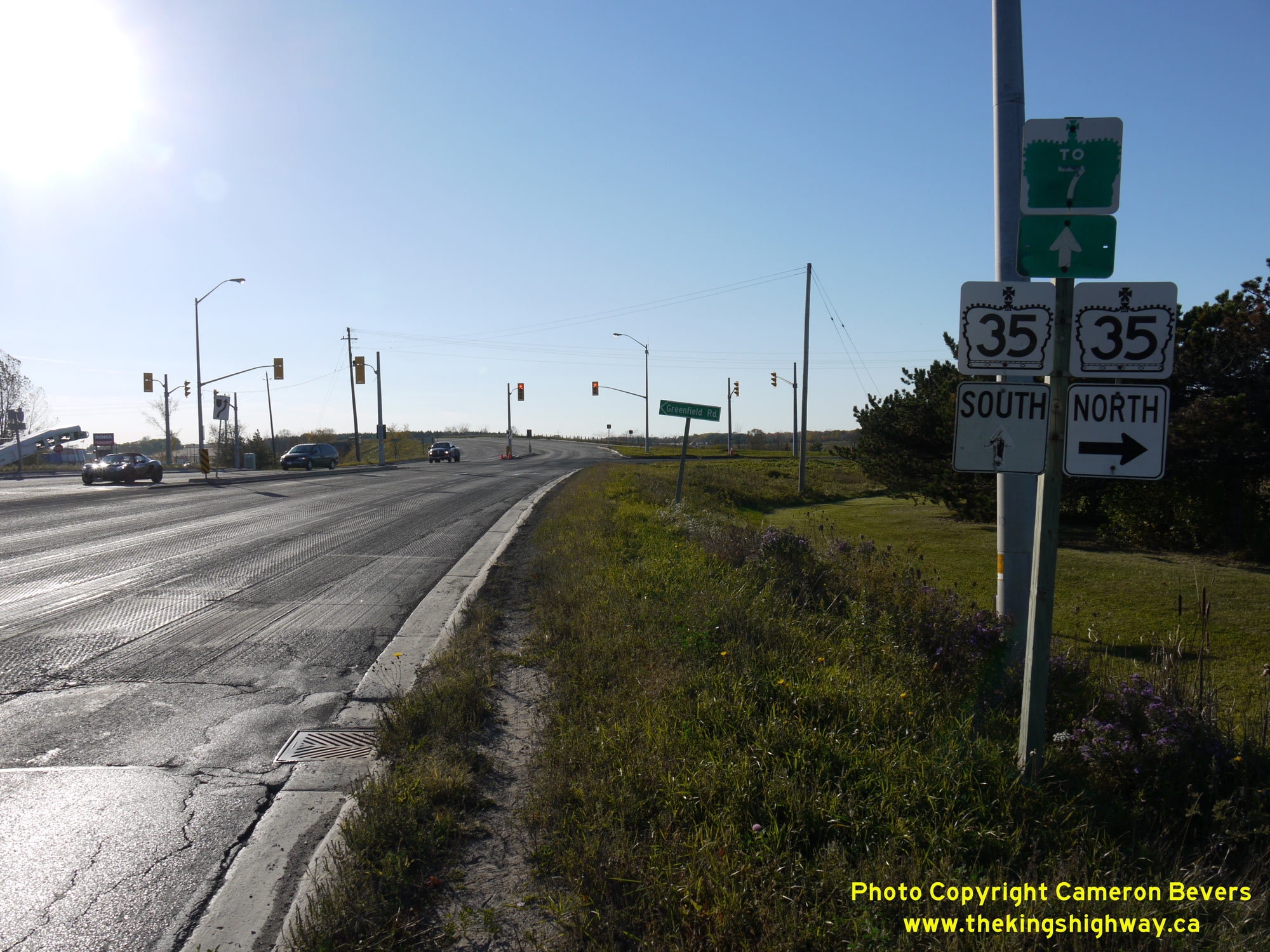
Left - View of the Lindsay Overhead on Hwy 35 & Hwy 7B, facing west from the Hwy 35 North and Hwy 35B Junction in Lindsay. See an
Enlarged Photo Here. (Photograph taken on October 10, 2010 - © Cameron Bevers) Right - Facing west along Kent Street (Hwy 7B & Hwy 35B) towards the Hwy 35 Junction. Note that Hwy 7 is trailblazed along the route of Hwy 35 South. Although it is not signed, this intersection marks the terminus of Hwy 35B. However, the route of Hwy 7B continues west for another 800 metres before terminating at nearby Hwy 7. See an Enlarged Photo Here. (Photograph taken on October 10, 2010 - © Cameron Bevers) 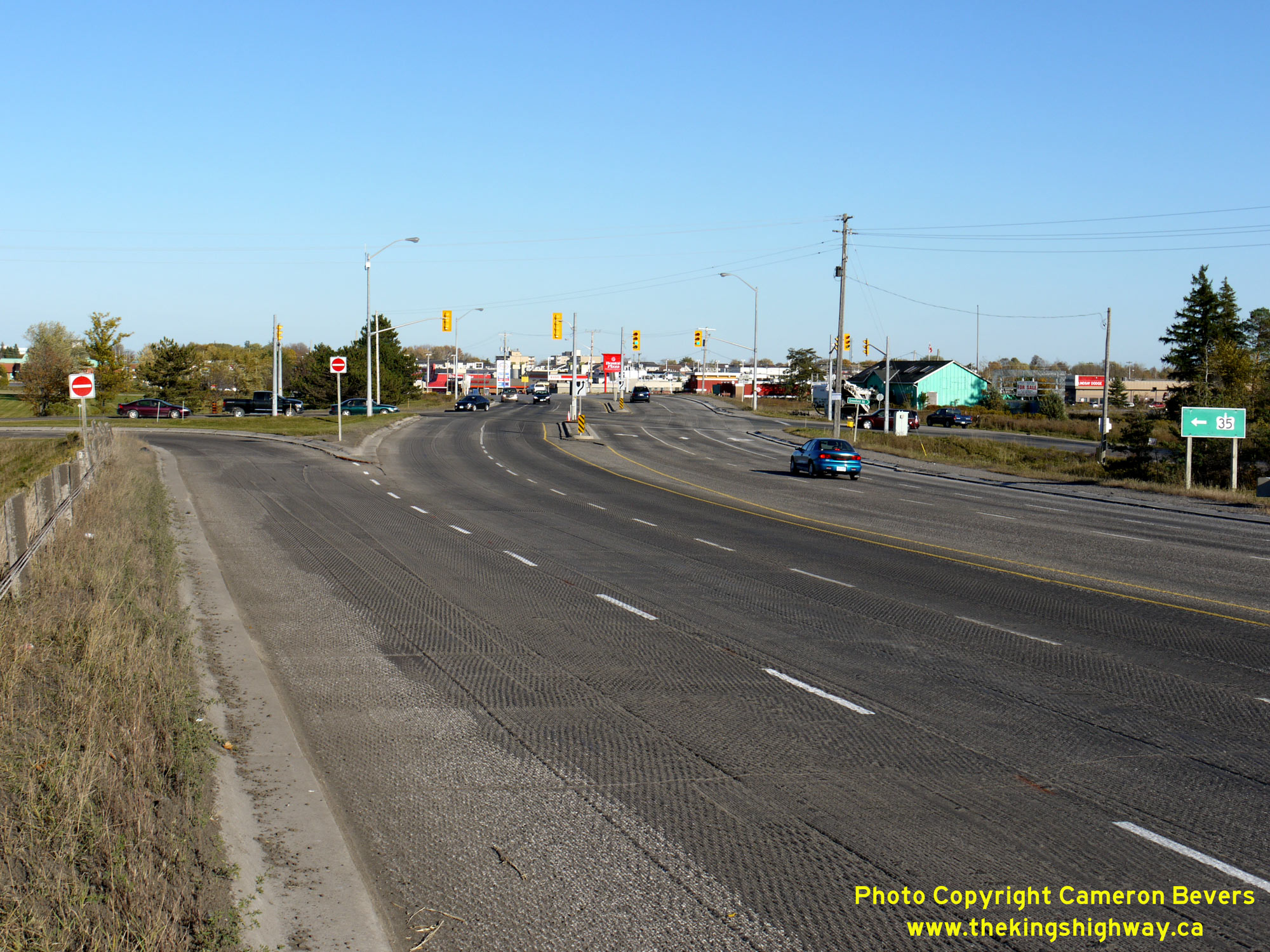
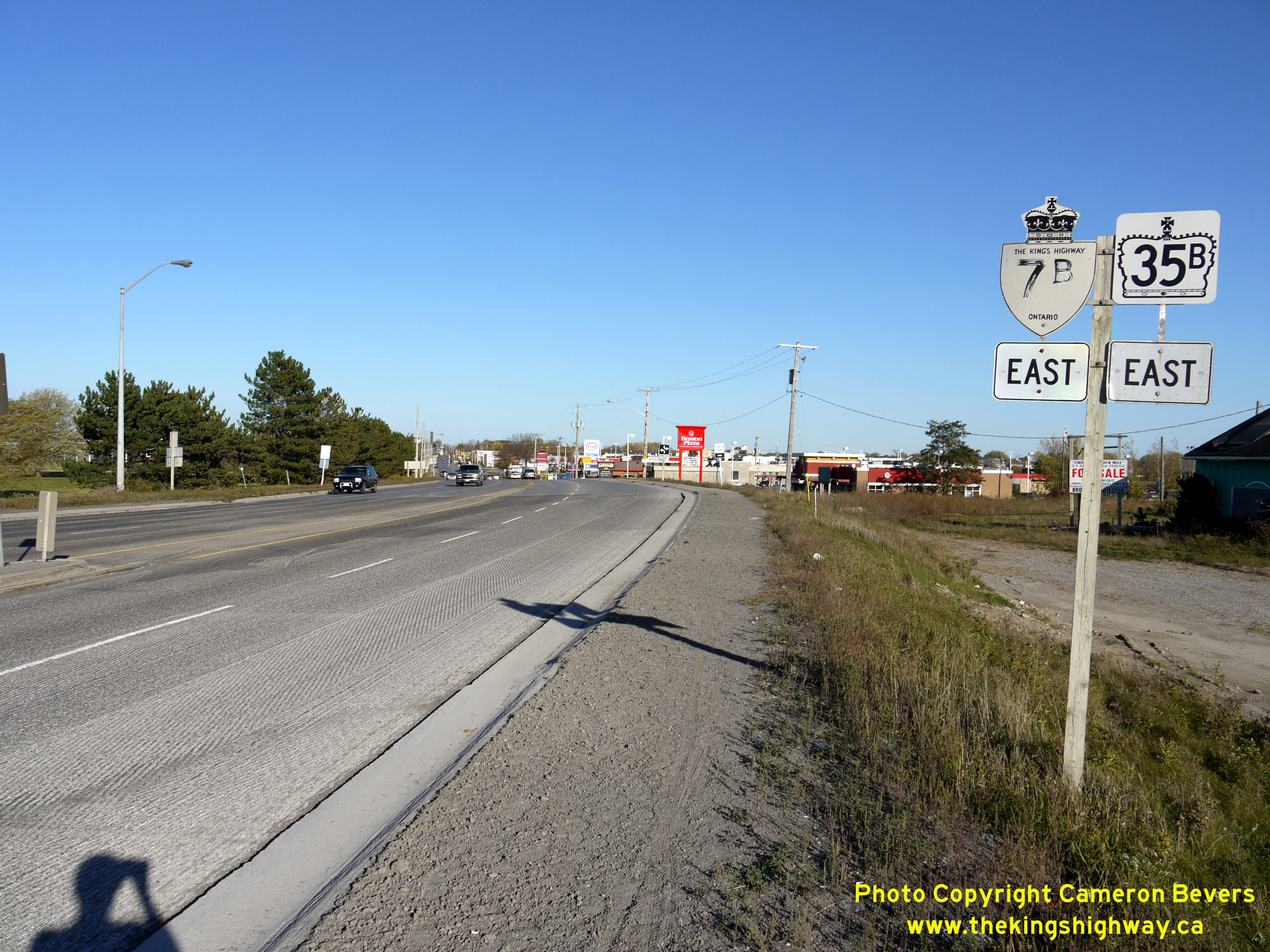
Left - Junction of Hwy 35 North and Hwy 7B, facing east towards Lindsay. At this junction, Lindsay's Hwy 35B Business Route also begins. It follows Kent
Street into Downtown Lindsay, concurrently with Hwy 7B. The route of Hwy 35 turns left here, and resumes its route north towards Fenelon Falls. See an
Enlarged Photo Here. (Photograph taken on October 10, 2010 - © Cameron Bevers) Right - Dual King's Highway route markers for Hwy 7B & Hwy 35B on Kent Street approaching Lindsay. See an Enlarged Photo Here. (Photograph taken on October 10, 2010 - © Cameron Bevers) 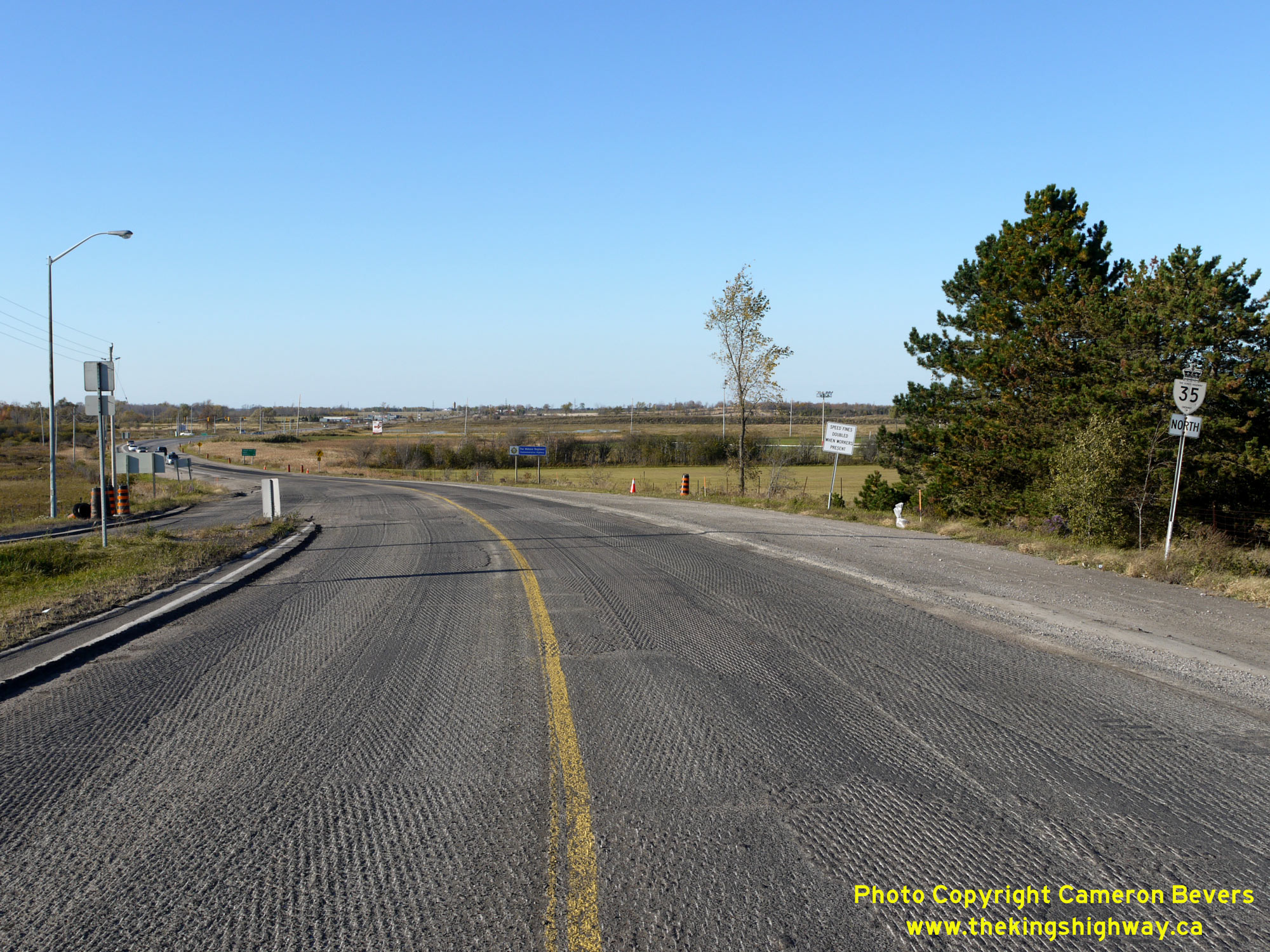
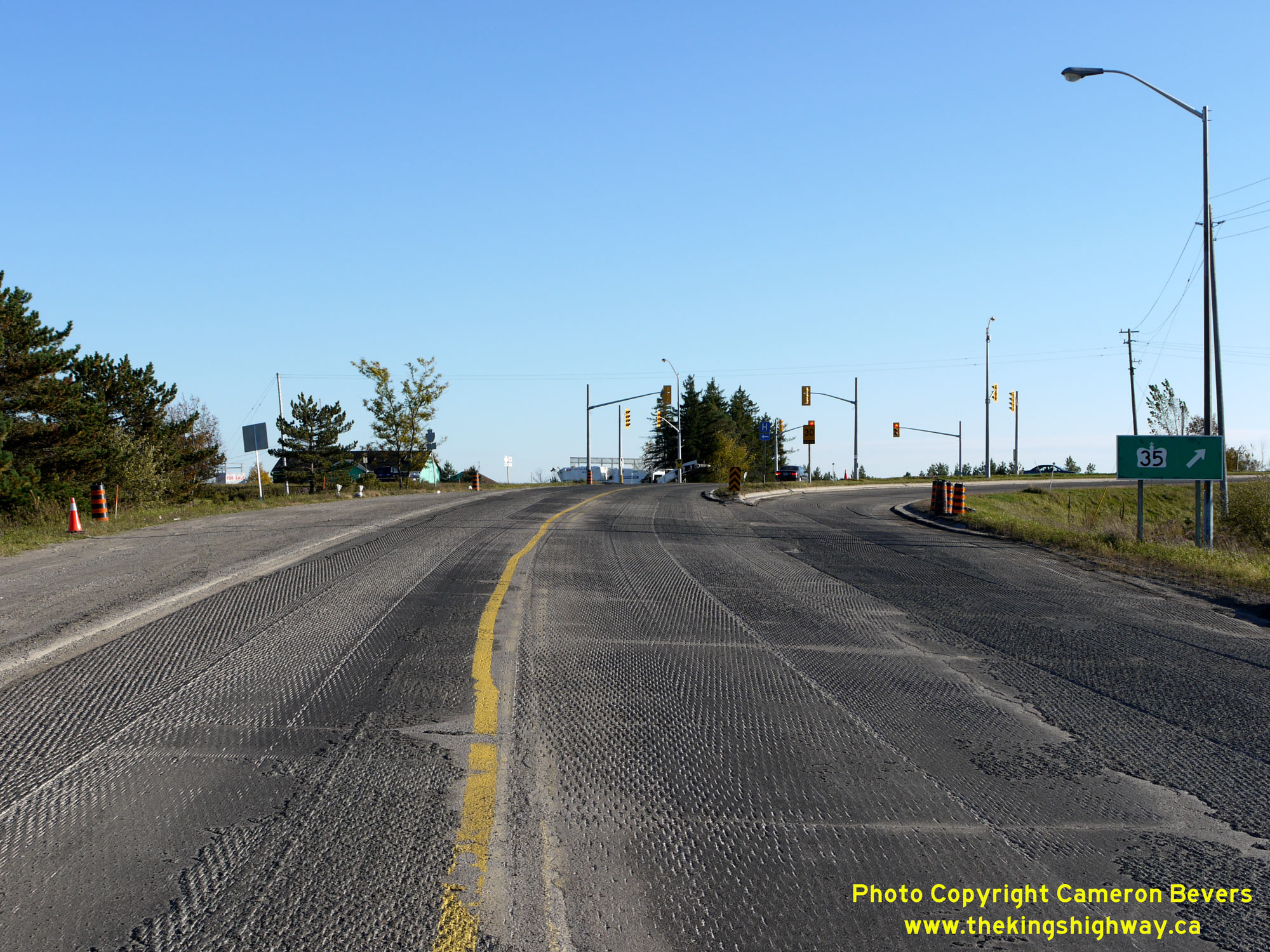
Left - View of Hwy 35 facing north from the Hwy 7B & Hwy 35B Junction at Kent Street in Lindsay. See an
Enlarged Photo Here. (Photograph taken on October 10, 2010 - © Cameron Bevers) Right - Facing south along Hwy 35 towards the Kent Street Junction (Hwy 7B & Hwy 35B) in Lindsay. A right-turn channelization ramp carries southbound Hwy 35 traffic out to the nearby Lindsay Bypass (Hwy 7 & Hwy 35). See an Enlarged Photo Here. (Photograph taken on October 10, 2010 - © Cameron Bevers) 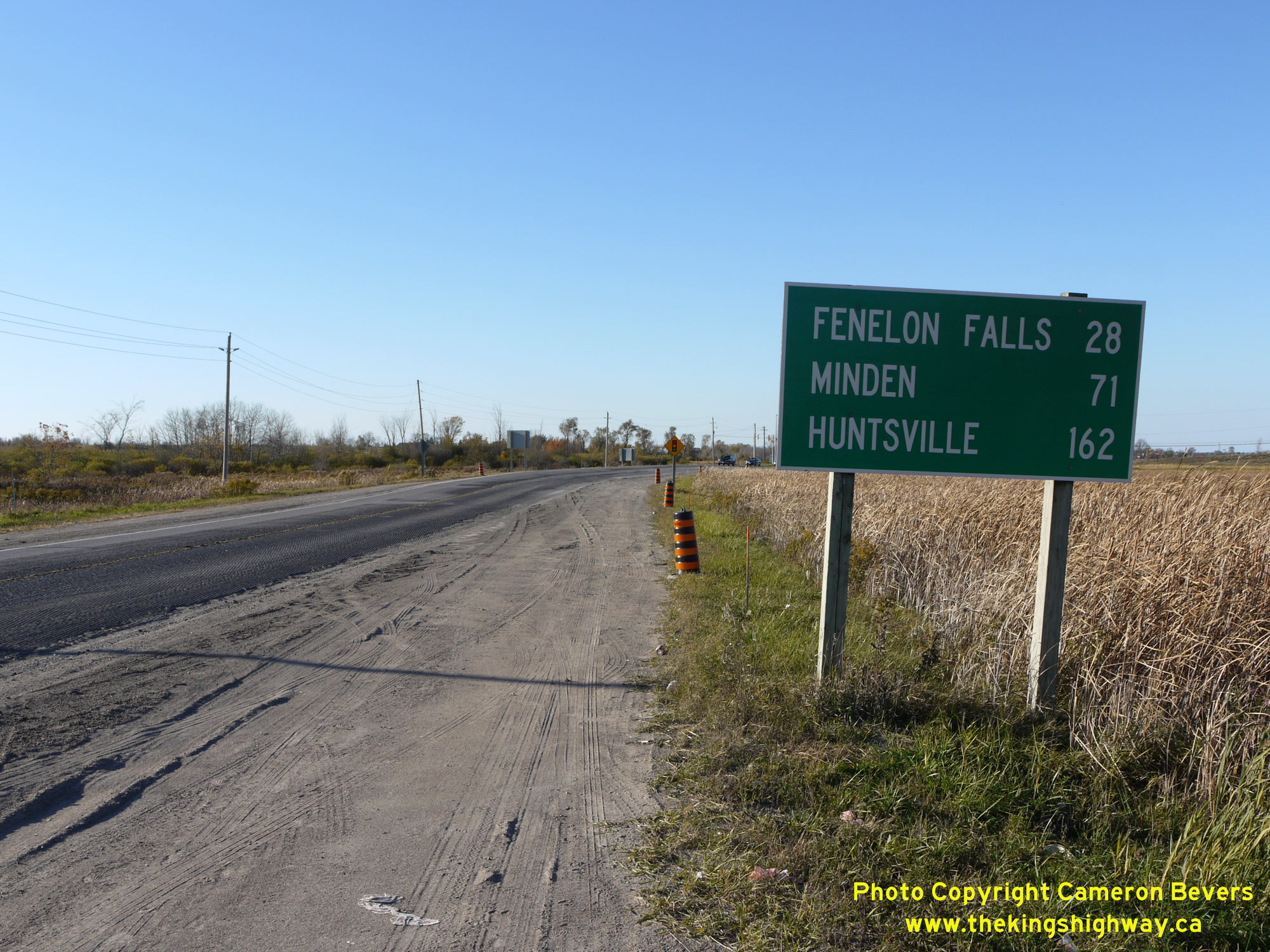
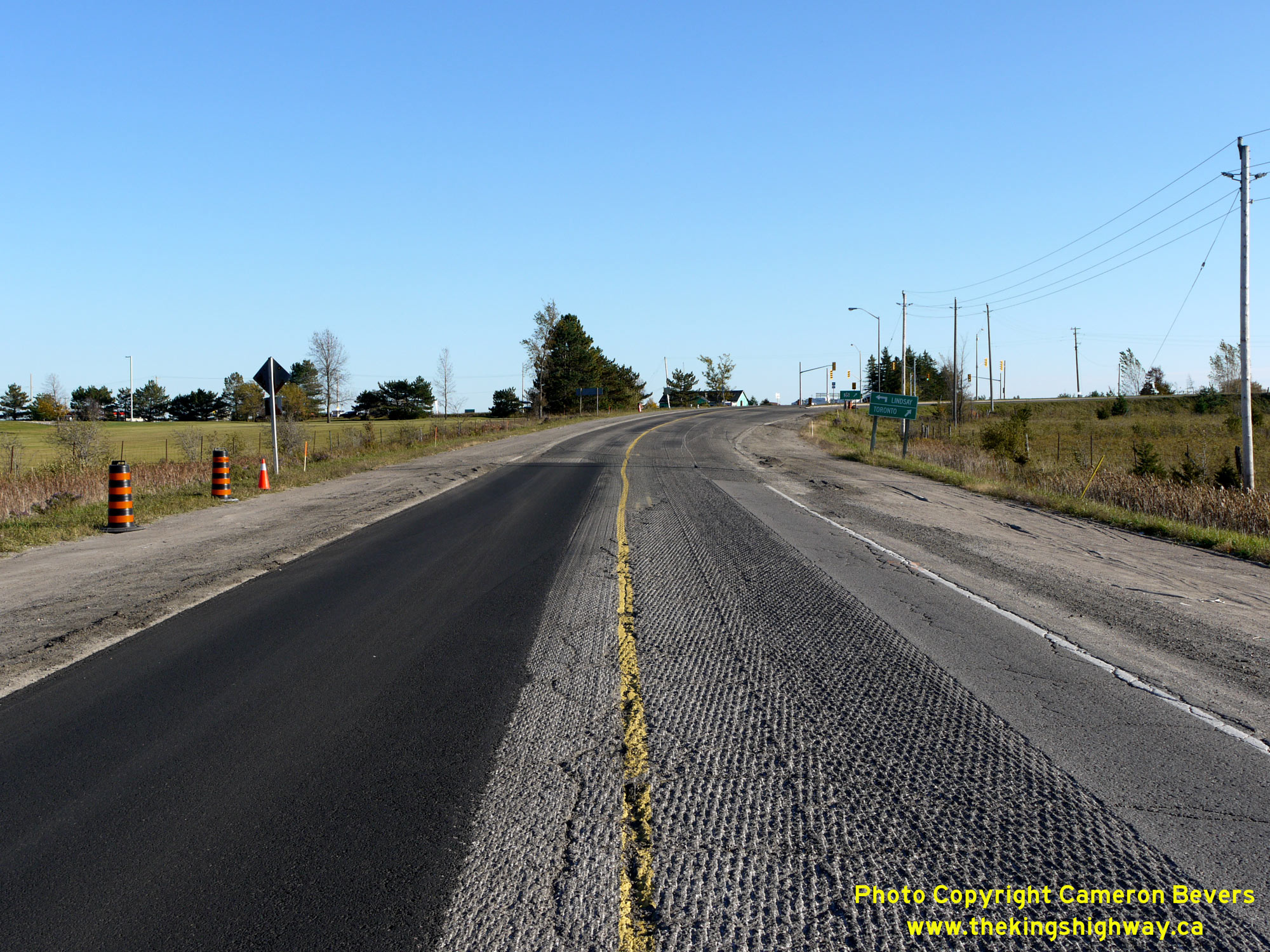
Left - Distance guide sign facing northbound Hwy 35 traffic, just north of the Hwy 7B & Hwy 35B Junction at Kent Street in Lindsay. See an
Enlarged Photo Here. (Photograph taken on October 10, 2010 - © Cameron Bevers) Right - Approaching the Hwy 7B & Hwy 35B Junction at Kent Street on southbound Hwy 35 in Lindsay. See an Enlarged Photo Here. (Photograph taken on October 10, 2010 - © Cameron Bevers) 

Left - Guide sign marking the Hwy 35 North Junction on Hwy 35 & Hwy 7B, facing east towards Lindsay. (Photograph taken on October 10, 2010 - © Cameron Bevers) Right - Junction assembly at the Hwy 35 & Hwy 7B Junction near Lindsay. (Photograph taken on October 10, 2010 - © Cameron Bevers) 
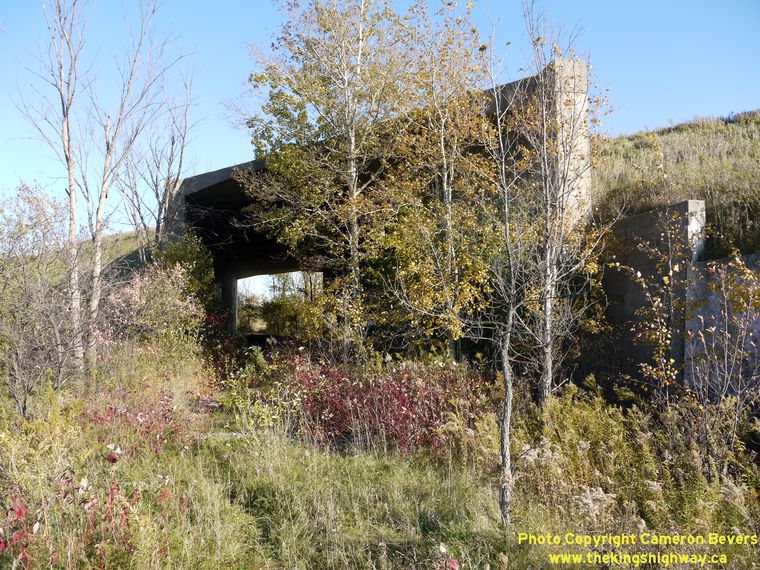
Left - Facing east across the Lindsay Overhead on Hwy 35 & Hwy 7B. (Photograph taken on October 10, 2010 - © Cameron Bevers) Right - Northern side of the Lindsay Overhead on Hwy 35 & Hwy 7B. This tunnel-type concrete rigid frame structure was completed in 1957, during the construction of the Lindsay Bypass. Originally, it spanned a Canadian Pacific Railway line. The railway was abandoned many years ago, making this structure redundant. (Photograph taken on October 10, 2010 - © Cameron Bevers) 

Left - Looking north from the Lindsay Overhead. The route of Hwy 35 can be seen heading north from Lindsay towards Fenelon Falls and Minden. See an
Enlarged Photo Here. (Photograph taken on October 10, 2010 - © Cameron Bevers) Right - The railway tracks below the Lindsay Overhead were removed decades ago. (Photograph taken on October 10, 2010 - © Cameron Bevers) 

Left - The Lindsay Overhead on Hwy 35 & Hwy 7B is one of four abandoned railway structures on the various legs of the Lindsay Bypass. The overgrown portal
at the southern end of the Lindsay Overhead adds to the ghostly aura of this interesting historic structure. (Photograph taken on October 10, 2010 - © Cameron Bevers) Right - The former railway line passed below the highway at a considerable skew. As a result, a substantial portion of the bridge deck is actually not occupied by the roadway itself. (Photograph taken on October 10, 2010 - © Cameron Bevers) 

Left - Approaching the Hwy 7B & Hwy 35 North Junction on the Lindsay Bypass (Hwy 7 & Hwy 35), facing west. (Photograph taken on October 10, 2010 - © Cameron Bevers) Right - Green guide sign marking the upcoming Hwy 7B & Hwy 35 North Junction on the Westbound Lindsay Bypass (Hwy 7 & Hwy 35). (Photograph taken on October 10, 2010 - © Cameron Bevers) 

Left - Junction assembly on the Westbound Lindsay Bypass (Hwy 7 & Hwy 35) at the Hwy 7B & Hwy 35 North Junction. (Photograph taken on October 10, 2010 - © Cameron Bevers) Right - Facing east along the Lindsay Bypass (Hwy 7 & Hwy 35) towards Peterborough, east of the Hwy 7B Junction. The Lindsay Bypass was completed and officially opened to traffic on October 10, 1958, following nearly three years or construction. (Photograph taken on October 10, 2010 - © Cameron Bevers) 

Left - Turn-off guide signs for the Hwy 7B & Hwy 35 North Junction on the Westbound Lindsay Bypass (Hwy 7 & Hwy 35). (Photograph taken on October 10, 2010 - © Cameron Bevers) Right - Facing west at the Hwy 7B & Hwy 35 North Junction on the Westbound Lindsay Bypass (Hwy 7 & Hwy 35). See an Enlarged Photo Here. (Photograph taken on October 10, 2010 - © Cameron Bevers) 

Left - Distance sign on the Lindsay Bypass (Hwy 7 & Hwy 35), facing east. (Photograph taken on October 10, 2010 - © Cameron Bevers) Right - Facing west along the Lindsay Bypass (Hwy 7 & Hwy 35) towards the Hwy 7B & Hwy 35 North Junction. (Photograph taken on October 10, 2010 - © Cameron Bevers) 

Left - Facing east along Hwy 7B and Hwy 35 from the Hwy 7 Junction. Note the former Hwy 7 alignment near the Honda dealership at right, which once crossed a
railway line at-grade. The newer diversion at left carries the highway over a grade separation. The railway line below the structure was subsequently abandoned. See
an Enlarged Photo Here. (Photograph taken on October 10, 2010 - © Cameron Bevers) Right - Facing east towards Peterborough along the Lindsay Bypass (Hwy 7 & Hwy 35) from the Hwy 7B Junction. (Photograph taken on October 10, 2010 - © Cameron Bevers) 

Left - Junction assembly at the western terminus of Hwy 7B at the Hwy 7 Junction. At the traffic signals, Hwy 35 turns left and runs concurrently with Hwy 7
along the Lindsay Bypass for 5 km before resuming its route south towards Newcastle. (Photograph taken on October 10, 2010 - © Cameron Bevers) Right - Green guide sign marking the Hwy 7 Junction on Hwy 7B & Hwy 35. Note the abandoned alignment of Hwy 7 at right, which was closed off to traffic in 1958, once the Lindsay Bypass was completed. (Photograph taken on October 10, 2010 - © Cameron Bevers) 

Left - Facing east at the Hwy 7B & Hwy 35 North Junction on Eastbound Hwy 7 near Lindsay. See an
Enlarged Photo Here. (Photograph taken on October 10, 2010 - © Cameron Bevers) Right - Facing east along Hwy 7B & Hwy 35 from the Hwy 7 Junction west of Lindsay. The routes of Hwy 7B & Hwy 35 run concurrently for 800 metres, before Hwy 35 turns north again towards Fenelon Falls and Minden. Hwy 7B then continues east into Downtown Lindsay via Kent Street. (Photograph taken on October 10, 2010 - © Cameron Bevers) 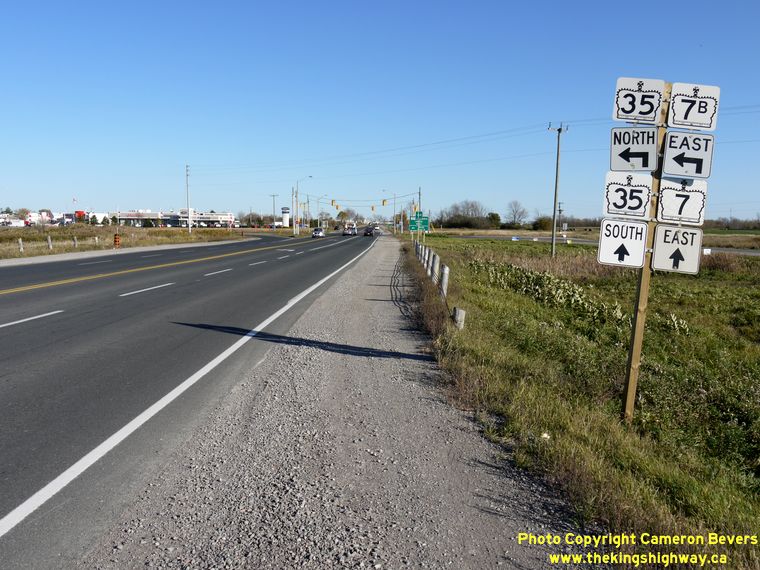

Left - Hwy 7B & Hwy 35 North Junction Assembly on Eastbound Hwy 7 near Lindsay. Until the 1990s, Lindsay had three different "B" Business Routes leading
into downtown from adjacent Hwy 7, Hwy 35 and Hwy 36. Although many of these business routes are still signed today, only a small section of Hwy 7B west of Lindsay
is still under provincial jurisdiction. (Photograph taken on October 10, 2010 - © Cameron Bevers) Right - Turn-off guide signs for the Hwy 7B & Hwy 35 North Junction on Eastbound Hwy 7 near Lindsay. The route of Hwy 7B generally follows the original alignment of Hwy 7 through Lindsay, before the Lindsay Bypass was opened to traffic in 1958. The route of Hwy 7B is still signed through Lindsay, although the only portion of the highway that is under provincial jurisdiction is the short 800-metre section that runs concurrently with Hwy 35 North. (Photograph taken on October 10, 2010 - © Cameron Bevers) 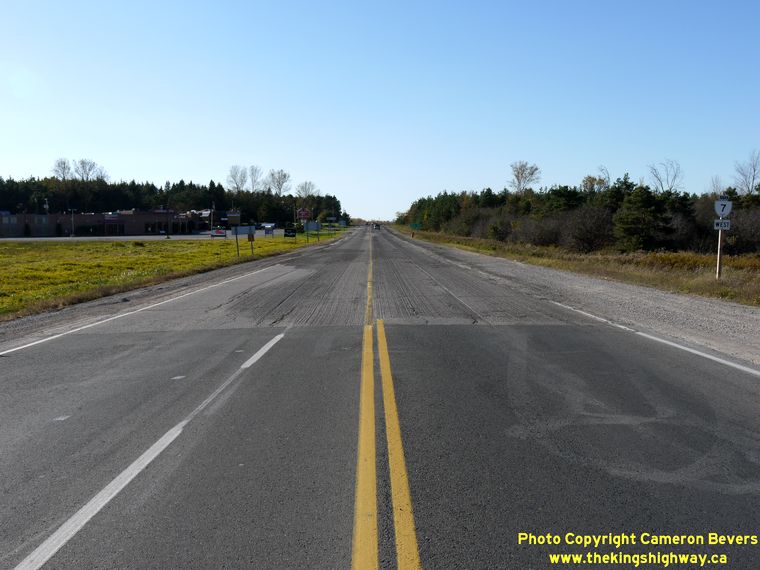

Left - Facing west along Hwy 7 towards Oakwood from the Hwy 7B & Hwy 35 North Junction near Lindsay. (Photograph taken on October 10, 2010 - © Cameron Bevers) Right - Facing east along Hwy 7 towards the Hwy 7B & Hwy 35 North Junction near Lindsay. (Photograph taken on October 10, 2010 - © Cameron Bevers) 

Left - Approaching Lindsay on Hwy 7, facing east towards the Hwy 7B & Hwy 35 North Junction. (Photograph taken on October 10, 2010 - © Cameron Bevers) Right - Green guide sign marking the upcoming Hwy 7B & Hwy 35 North Junction on Eastbound Hwy 7. (Photograph taken on October 10, 2010 - © Cameron Bevers)
More King's Highway 7B Photographs Coming Soon!
|
|---|
Links to Adjacent King's Highway Photograph Pages:
Back to King's Highway 7 Photos /
King's Highway 7B (Lindsay) History /
On to King's Highway 8 Photos
Ontario Highway History - Main Menu / Back to List of Highways Website contents, photos & text © 2002-2026, Cameron
Bevers (Webmaster) - All Rights Reserved / Contact Me
|
|---|